How to Edit Natural Skin Tones in Lightroom
How to Edit Natural Skin Tones in Lightroom
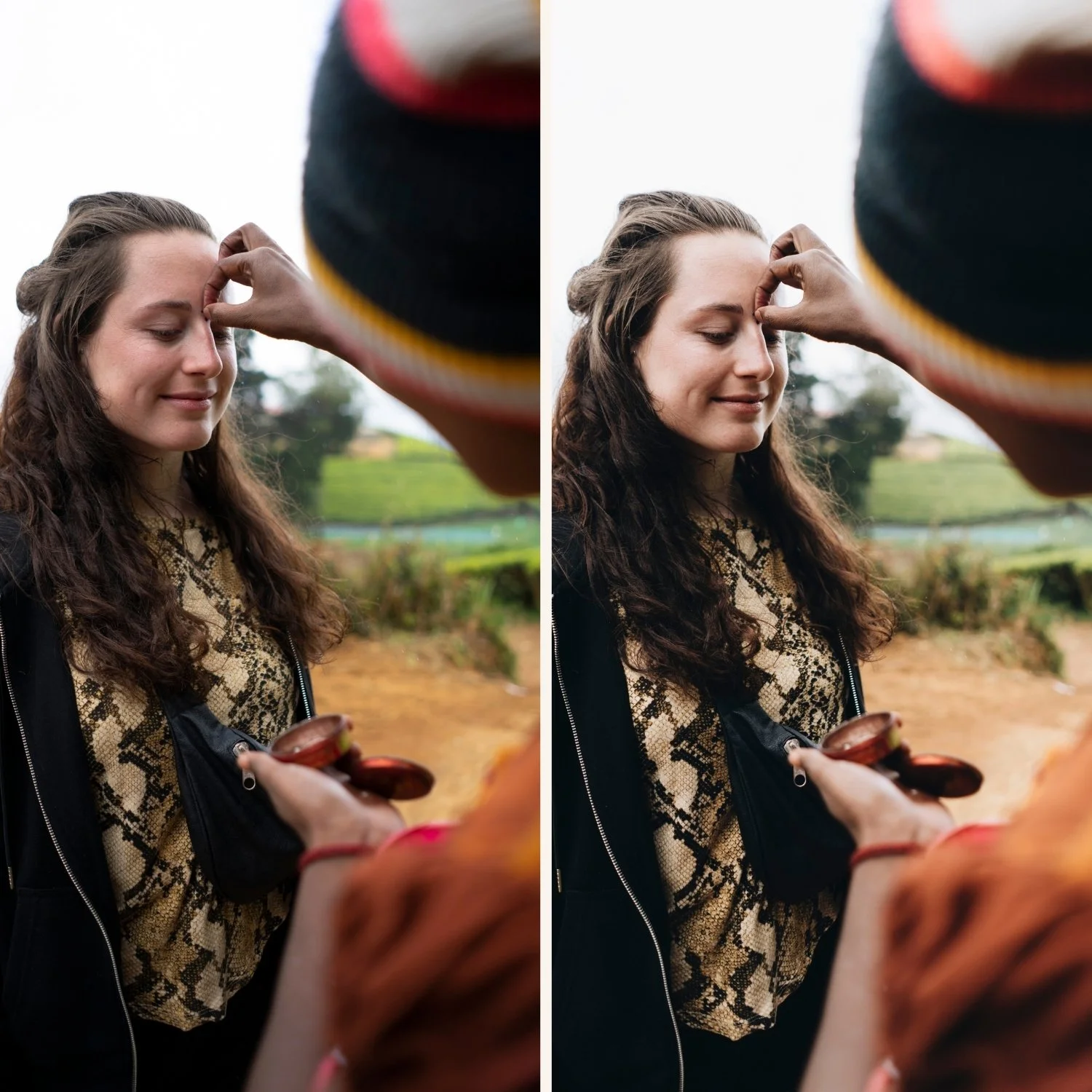
Natural skin tones are the hardest part of film-style editing to get right consistently. Everything else — contrast, greens, highlight roll-off — can be calibrated once and applied across a whole shoot. Skin tone rendering is different. It changes with every camera, every ambient light temperature, every subject's individual skin tone, and every preset applied on top of all of those variables. A setting that produces beautiful skin in warm afternoon light produces orange skin under overcast conditions and yellow skin indoors.
The reason most photographers struggle with skin tones in film editing is that they approach it as a single problem with a single solution. Apply the preset, pull Orange Saturation down a bit, and hope for the best. That produces consistent skin on photos in exactly one type of light, and inconsistent skin on everything else.
The correct approach is systematic. Understand the four variables that affect skin rendering, calibrate each one independently, and build a workflow that produces natural skin reliably across varied conditions.
The Four Variables That Affect Skin Rendering
White balance. Skin tones shift with every white balance change. The same Orange Saturation setting that produces natural skin at 5,200K reads as orange at 5,800K and cool at 4,800K. White balance is the foundation of skin tone rendering, not a secondary adjustment. Correct the white balance to match the ambient light before any other adjustment. This is the single most important step.
Orange channel in HSL. The orange channel in the HSL panel controls the primary range where most human skin tones live. Orange Saturation and Orange Luminance together determine whether skin reads as warm and dimensional or orange and processed. Orange Saturation at or above 0 combined with a warm white balance is the primary cause of orange skin in film editing.
Red channel in HSL. The red channel affects the warm end of skin — cheeks, lips, the way skin reads in warm directional light. Heavy Red Saturation pushes skin into a red-warm territory that digital cameras already produce too strongly. Red Luminance affects how bright the warmest skin areas appear.
Tone Curve. The midtone contrast that skin lives in is shaped by the Tone Curve. A steep S-curve increases midtone contrast, which makes skin transitions between light and shadow harsh rather than smooth. The soft Tone Curve that film aesthetic editing requires also produces smoother, more natural skin transitions.
The HSL Approach for Natural Skin
Start with Orange Saturation. For film-style editing in warm to neutral light, reduce it to -10 through -20 as a starting point. This is almost always lower than photographers expect. Digital cameras render orange at a vivid level that does not exist in equivalent film photography, and every step of film aesthetic editing — warm white balance, warm Color Grading — adds more orange on top of the starting digital value.
Increase Orange Luminance by +5 to +15. This is the counterbalancing adjustment. Reducing Orange Saturation can make skin appear slightly flat or olive if Luminance is not increased alongside it. The Luminance lift keeps skin bright and present — warm and glowing rather than warm and dull.
Red Saturation should be reduced by -5 to -15, with the specific value depending on the ambient light temperature and the individual subject. In warm afternoon light, Red Saturation can remain closer to 0 because the warm ambient already pushes in this direction naturally. In harsher midday or artificial light, the reduction should be stronger. Red Luminance can be adjusted +3 to +8 to keep cheeks and warm facial areas present without being heavy.
Yellow Saturation at -5 to -15 removes the slightly yellowish quality that some skin tones develop at warmer white balance settings.
Managing Skin Across Varied Lighting Conditions
The most important workflow habit for consistent skin tones is fixing white balance to each individual scene before applying any preset or HSL adjustment. Photographers who apply a preset to every photo with a fixed white balance setting get consistent skin tones only in the specific lighting conditions the preset was calibrated for. In every other condition, the skin shifts.
The practical routine is: open the photo, correct White Balance to the ambient light source first (daylight, overcast, shade, tungsten), then apply the preset. All subsequent adjustments — HSL, Color Grading — operate on a correctly balanced starting point. This produces much more consistent skin across a full shoot than trying to correct skin tones after applying the preset to an incorrectly balanced file.
Color Grading and Its Effect on Skin
Color Grading in the Highlights range adds warmth to the brightest tonal values in the image, which includes skin highlights. Highlight Color Grading with Hue 40-50 and Saturation 5-10 produces the golden quality in skin highlights that references warm film photography. At higher Saturation values (15+), the same setting starts to make highlights read as yellow or orange rather than golden — particularly on lighter skin tones in bright conditions.
Shadow Color Grading affects the coolest parts of skin — facial shadows, under the chin, neck and chest in directional light. Keeping Shadow Color Grading close to neutral prevents the cool shadow areas of skin from developing a teal or grey quality that can look unnatural.
Adapting for Different Skin Tones
The HSL values above are calibrated for mid-range skin tones in warm natural light. For darker skin tones, Orange Luminance should typically be increased more (up to +20) to ensure skin has sufficient brightness and richness within a muted film palette. Orange Saturation can be reduced less aggressively (-5 to -12) because the deeper natural saturation in darker skin benefits from more color presence. Red Saturation reduction should be moderate (-5 to -10).
For lighter skin tones in very warm light, Orange Saturation reduction should be more aggressive (-15 to -25) because lighter skin tones amplify the orange cast more visibly than darker ones at the same Temperature setting.
FAQ
Why does my skin look orange even after reducing Orange Saturation?
The most common cause is white balance pushed too warm before applying the preset. If Temperature is above 5,600K and the preset adds additional highlight warmth via Color Grading, the combination produces orange regardless of Orange Saturation reduction. Start by pulling Temperature back to neutral-warm before adjusting HSL.
Should I always reduce Orange Saturation for a film look?
Yes for almost all film aesthetics. Digital cameras render orange more vividly than film photography did. The warm color bias of film presets and Color Grading adds further warmth on top. Orange Saturation reduction is a standard correction for film editing, not an optional one.
Does my choice of preset affect skin rendering?
Yes significantly. Different presets apply different HSL calibrations. Some push Orange Saturation toward 0 or above. Others reduce it in the calibration. Understanding how the preset you are using handles the orange channel tells you how much additional adjustment is needed per photo.
Does skin rendering look different on ProRAW vs JPEG on iPhone?
Yes. ProRAW preserves more tonal transitions in skin, which makes the Orange Luminance adjustment more precise and the reduction in Orange Saturation more clean. On JPEG, aggressive Orange Saturation reduction can occasionally produce slightly olive skin because the tonal transitions are more compressed.
Try a film base with calibrated skin tones on your own photos:
Download the free Analog Film preset and apply the Orange channel adjustments described above to see how targeted HSL control produces natural skin within a film palette.
For portrait-specific presets built with skin-first color calibration, the Essence Archive and the Glow Portrait Archive are both calibrated around natural skin rendering as the primary value.