Why Your Instagram Feed Looks Inconsistent — And How to Fix It
Why Your Instagram Feed Looks Inconsistent — And How to Fix It
An inconsistent Instagram feed is almost always an editing problem, not a photography problem. The photos are good individually — the issue is that they do not look like they came from the same photographer. Different colour temperatures, different shadow depths, different levels of saturation from photo to photo. The feed looks like a collection rather than a body of work.
This guide covers the specific causes of feed inconsistency and the exact approach to fixing them.
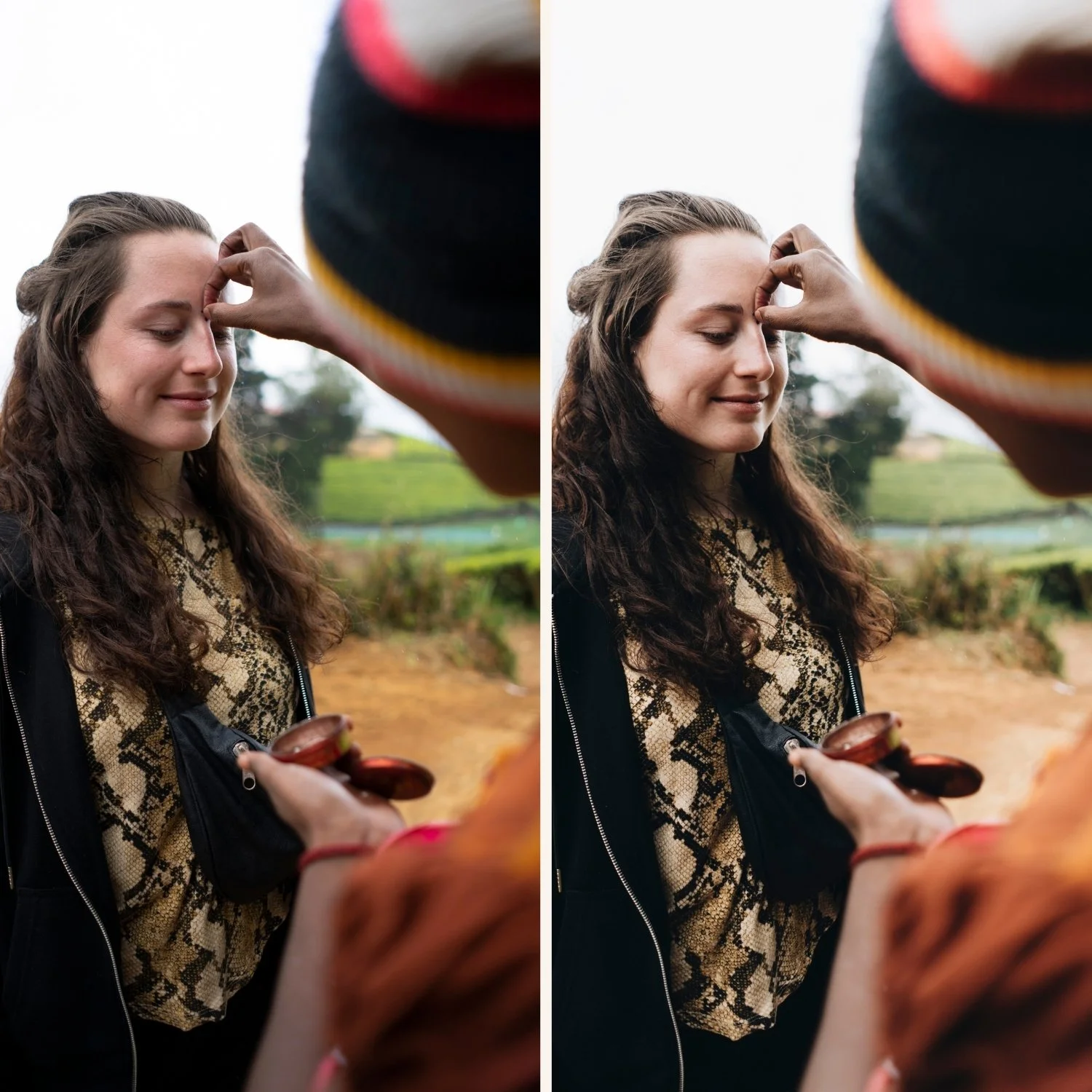
The five causes of feed inconsistency
1. No base preset — or a different preset for every photo. The most common cause. Choosing a preset based on what seems to suit each individual photo produces variety rather than identity. A warm preset for golden hour, a cool preset for overcast, a moody preset for dramatic scenes — each decision is locally correct but the aggregate looks like a different photographer each time.
2. Preset applied but white balance not corrected first. A warm preset applied to a cool white balance produces a different colour result than the same preset applied to a warm white balance. If white balance varies between photos before the preset is applied, the preset produces different results each time even though the settings are identical.
3. Switching between different editing applications. Photos edited partly in Lightroom, partly in the phone's native editor, partly in other apps all have different colour science foundations. The same "warm and muted" direction applied across three different applications produces three different results.
4. Adjusting too many sliders per photo. Making large manual adjustments to individual photos — changing Vibrance, Saturation, Color Grading, and HSL values per photo on top of a base preset — introduces variation. The base preset sets the identity. Per-photo adjustments should be limited to Exposure and White Balance only.
5. Seasonal or mood-based editing drift. Editing more warmly in autumn, more moodily in winter, more brightly in spring. Individually rational decisions that produce a feed where the time of year is more visible than the photographer's identity.
The fix: what consistency actually requires
Consistent feeds are built on three things:
One base preset applied to every photo. Not a different preset per scenario, not a different preset per mood. One preset that represents your visual identity, applied as the foundation to every photo you post.
White balance fixed before the preset, not after. Set white balance to approximately 5,200-5,600K for daylight, 5,800-6,200K for overcast, and correct indoor photos to the ambient before applying. The preset then produces a consistent result from a consistent starting point.
Per-photo adjustments limited to Exposure and White Balance. These two change with every photo and must be adjusted manually. Everything else — colour calibration, shadow depth, grain, Color Grading — should come from the preset and stay fixed.
Building the consistent edit
Step 1 — Choose one direction.
Warm film look, clean neutral, moody atmospheric, or cool editorial. Not a blend of two or three. The clearer the direction, the more consistent the output.
Step 2 — Build or choose a base preset.
The free A6 preset is the most versatile starting point for warm, clean film quality. Apply it to ten recent photos from your feed. If the results look cohesive, A6 is your base. If not, identify what is wrong — too warm, too muted, too bright — and adjust accordingly before saving as your personal base preset.
Step 3 — Fix white balance before applying.
Go through your last 20 posts and check the white balance of each before the preset was applied. How much does it vary? If it varies by more than 500-800K between photos, white balance correction before applying is the most important single change you can make.
Step 4 — Apply and adjust only Exposure and White Balance.
Apply the base preset. Adjust Exposure so the photo looks correctly bright. Adjust White Balance so skin and neutral areas look correct. Stop there. Do not adjust Vibrance, Saturation, Color Grading, or HSL values per photo unless something is clearly wrong.
Step 5 — Preview in the grid before posting.
Lightroom has a grid view. Instagram preview tools (Preview, Planoly) show how a new photo will look alongside existing posts. Always check new photos in context before posting. A photo that looks good individually can disrupt the grid if the colour temperature or brightness is notably different from surrounding posts.
The most common feed consistency mistakes
Adjusting the preset for each season. Spring is brighter so you lift Exposure more. Autumn is warmer so you increase Orange Saturation. Winter is moodier so you deepen the shadows. All reasonable decisions that produce a feed where the seasons define the aesthetic rather than the photographer.
Solution: the seasonal variation should happen in white balance only. A spring photo at 5,400K and an autumn photo at 5,600K, with the same base preset applied, will look seasonally different without losing the overall visual identity.
Posting photos from different cameras without camera-specific preparation. A Canon file and a Sony file with the same preset applied look different because the colour science is different. The camera-specific Camera Calibration profile and colour corrections must be applied before the preset for consistency across cameras.
The Analog Film Archive for feed consistency
The Analog Film Archive is built as a cohesive collection — ten presets that share the same colour philosophy and tonal foundation. Using A6 as the base and A4 for golden hour, for example, produces cohesive variation rather than stylistic inconsistency because both are calibrated to the same visual identity.
Explore the Analog Film Archive — $27 →
For photographers who want the complete TES collection across every style and scenario, the Studio Archive contains every preset in the shop.
FAQ
How long does it take to see a consistent feed after changing my editing approach?
Approximately 20-30 posts at the new consistency level before the feed starts reading as cohesive. The older inconsistent posts will still be visible — but as the consistent posts accumulate, the overall character of the feed shifts.
Should I re-edit old posts to match my new direction?
Not retroactively for all of them. Re-edit the most recent 9-12 posts (the first grid view) if the inconsistency is severe. Beyond that, the time cost is not worth the benefit — the feed moves forward naturally as you post consistently.
Can I have different presets for different content types (portraits vs landscapes)?
Yes as long as they share the same visual identity. Portrait preset and landscape preset from the same collection produce cohesive variation. Portrait preset from one brand and landscape preset from another brand produce inconsistency.