Film Editing Trends 2026 — What Is Changing in Lightroom Photography
Film Editing Trends 2026 — What Is Changing in Lightroom Photography
Photography editing trends move slowly — faster than fashion, slower than social media. The heavy moody edits and crushed-black cinematic looks that dominated from 2018 to 2022 are fading. The clean film look, natural skin tones, and the soft casual aesthetic of found photography are replacing them. In 2026, the photographers gaining the most traction are editing with less.
This guide covers the specific trends shaping film editing in 2026 — what they look like, what is driving them, and the exact Lightroom settings to achieve each one.
Trend 1 — The clean film look replacing heavy moody edits
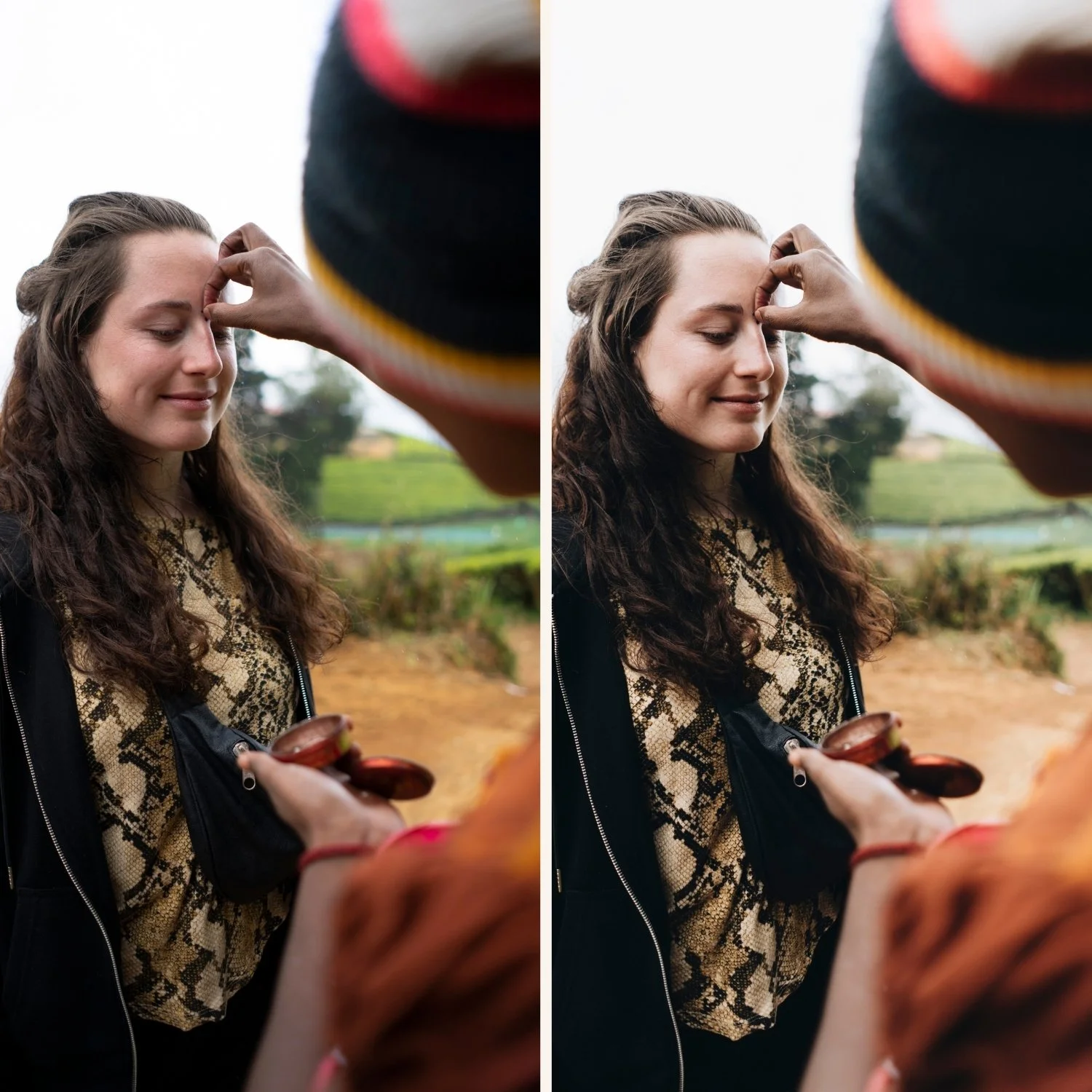
The most significant shift in photography editing in the last two years is the move from heavy, dark, crushed-black moody edits toward cleaner, lighter, more organic film quality.
Heavy moody editing — deep shadows, muted desaturated color, strong contrast — dominated from 2018 to approximately 2022. By 2024 it had become the default aesthetic of mid-tier photographers, which is exactly when the photographers setting the aesthetic direction moved away from it.
The clean film look in 2026 is not bright-and-airy. It is warm, organic, slightly lifted, and visually understated. The reference is Kodak Portra shot well rather than heavily processed cinema footage.
What it looks like: Natural skin tones with golden warmth. Open shadows with visible detail. Soft highlight roll-off. Muted but present color. Fine, organic grain.
Lightroom settings: Blacks: +20 to +28. Highlights: -35 to -45. Contrast: -12. Vibrance: -8 to -12. Shadow Color Grading: Hue 38, Saturation 10-12.
Preset: A6 Clean Portrait is the most direct expression of this trend in the collection. A1 Analog Original for a slightly more neutral version.
Trend 2 — Natural skin tones winning over heavy grading
Skin tone editing is shifting away from the heavily stylized looks of previous years — orange golden skin, desaturated grey-cool skin, heavy teal-and-orange grading — toward natural, luminous skin that looks like the subject rather than a filter.
The driver is partly a backlash to AI-enhanced skin in social photography, which made overly processed skin look generic. Natural skin tone editing reads as skilled and intentional in a way that filtered skin no longer does.
What it looks like: Warm but not orange. Luminous but not brightened. Skin that looks like the person rather than a preset output.
Lightroom settings for natural skin tones: Orange Luminance: +14 to +18. Orange Hue: +5 to +8 toward yellow. Orange Saturation: +2 to +5 (not higher). Clarity: -10 to -12 (removes micro-contrast on skin texture). Camera Calibration: Camera Neutral (Canon), Camera Standard (Sony).
The key shift from previous trends: Orange Saturation is lower than before. The warmth comes from Luminance and Hue rather than Saturation — which reads as golden rather than orange.
Preset: A6 Clean Portrait. The most skin-calibrated preset in the collection.
Trend 3 — Soft flash and casual film aesthetic
The soft flash aesthetic — direct on-camera flash with a slight overexposure, vivid consumer-film color, and casual composition — has moved from niche to mainstream in 2025 and 2026. The reference is 35mm disposable camera photography from the late 1990s and early 2000s.
This trend is partly a reaction to the highly produced, perfectly lit quality of professional social photography. Soft flash images look found and spontaneous in a way that studio-quality photography does not.
What it looks like: Slightly overexposed bright areas from direct flash. More contrast than the clean film look. Slightly vivid consumer-film color. Visible grain. Slight red-eye or hard catchlights in portraits.
Lightroom settings: Exposure: +0.2 to +0.4 (slight overexposure simulation). Highlights: -15 to -20 (less protection than standard — flash overexposure is part of the aesthetic). Contrast: 0 to +10 (more contrast than clean film look). Vibrance: 0 to +8 (more vivid than clean film). Orange Saturation: +5 to +10. Grain Amount: 30-42, Size 28-36, Roughness 48-56.
Preset: A5 Deep Contrast at 85% gets closest to the flash aesthetic with slight Vibrance and Orange Saturation increase after applying.
Trend 4 — Minimal color grading over heavy Color Grading
Heavy Color Grading — obvious teal shadows, orange highlights, strong split-tone effects — peaked around 2021. In 2026 the direction is toward minimal, almost invisible Color Grading that adds warmth and depth without the viewer being able to identify it as a specific edit.
The principle: Color Grading should feel like the natural quality of the light, not like a filter applied after the fact.
What minimal Color Grading looks like: Shadow Color Grading: Hue 38-42, Saturation 8-12. Present but never obvious. Highlight Color Grading: Hue 40-45, Saturation 3-5. Very subtle. No heavy teal-orange split. No strong blue shadow quality.
The test: if a viewer can immediately identify the Color Grading effect, it is too strong for the 2026 direction.
Preset: A6, A7, A3 all use restrained Color Grading that suits this direction. Reduce Shadow Color Grading Saturation to 8-10 on any preset for a more minimal quality.
Trend 5 — Film grain making a full return
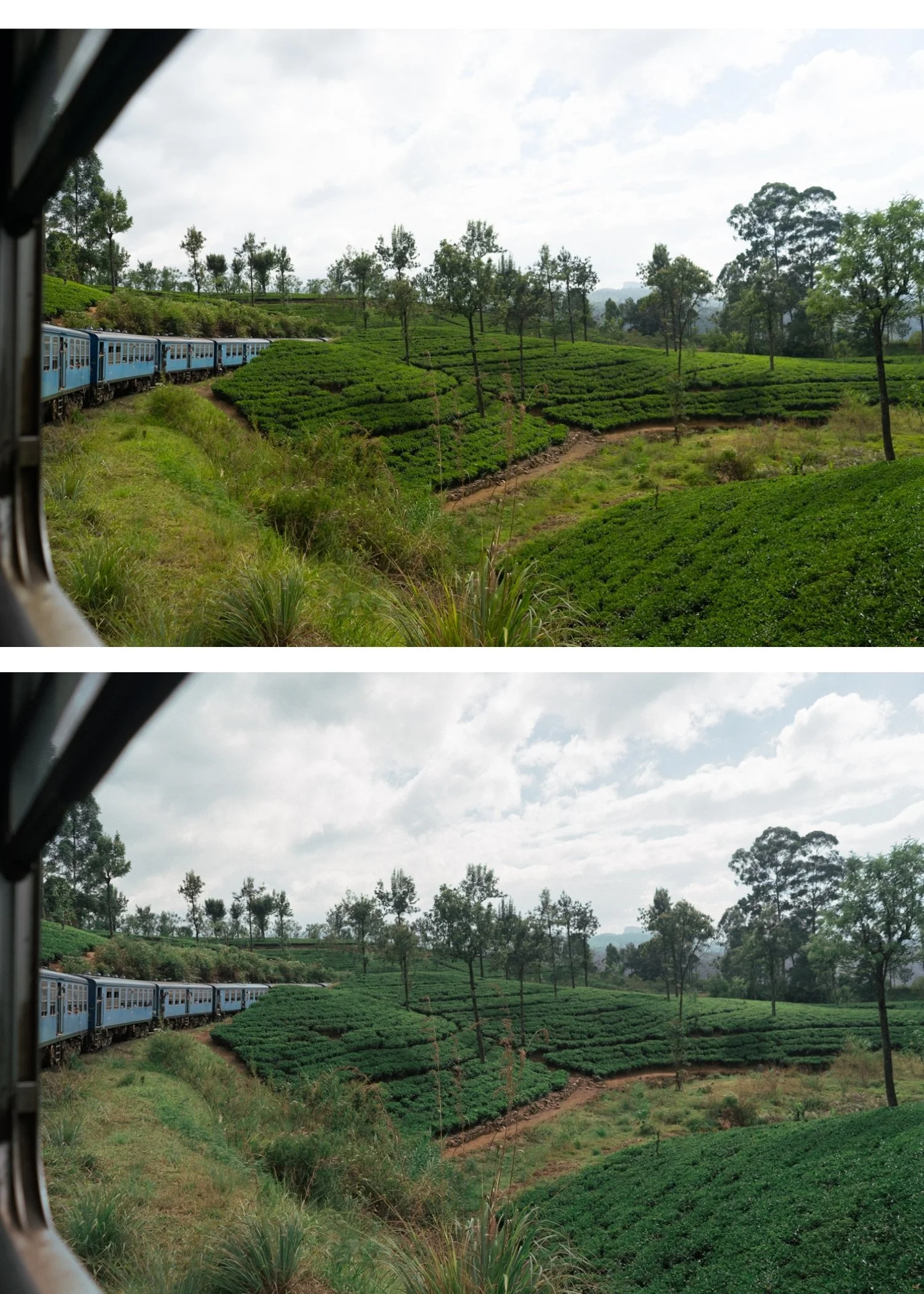
After years of noise reduction as the goal of post-processing, grain is not just accepted in 2026 but actively sought. The AI Denoise tools in Lightroom have made it possible to first remove noise completely and then add back calibrated grain — the best of both worlds.
The result is a generation of photographers whose images have the organic texture of film grain without the inconsistency of actual film noise.
Grain in 2026 is specific: Amount: 18-28 (visible but not heavy). Size: 22-28 (film-sized, not noise-sized). Roughness: 44-54 (always above 42 — below this grain looks uniform and digital).
The workflow for maximum quality: apply AI Denoise on any photo above ISO 1600 first, then add grain at the values above. Clean base, organic texture.
What is fading: heavy grain over 40 Amount that reads as a texture effect rather than film quality.
Trend 6 — Muted color over vivid saturation
The overall trajectory of photography editing across the last decade has been toward less saturation. The vivid, high-saturation edits of Instagram's early years have given way to progressively more muted, organic color — a trajectory that continues in 2026.
Vibrance: -8 to -15 is the 2026 standard. Saturation: -3 to -8 on some stylized looks.
The exception is the soft flash / disposable aesthetic above, which intentionally references the vivid consumer-film color of the late 1990s.
What is fading: heavy Vibrance boosts, vivid neon color, heavily saturated landscapes.
What is staying the same
The organic film look fundamentals are not trend-dependent — they are timeless qualities that happen to align with the current direction:
Lifted Blacks (+18 to +28). Soft highlight roll-off (Highlights -30 to -45). Fine grain (Amount 18-26). Warm but controlled skin tones. Negative Clarity (-8 to -12).
These have been correct for four years and will continue to be correct regardless of trend cycles.
FAQ
Is the heavy moody look completely dead?
No — it still performs well for specific genres including dark interior photography, dramatic landscape work, and certain editorial contexts. What is fading is moody as a default — the choice of moody for every subject regardless of lighting or context.
Should I change my entire editing style to match 2026 trends?
No. Trends inform direction but the best editing style is a consistent, personal one. The clean film look suits most photography naturally — if your existing style is already in this direction, minor calibration is enough. If your style is heavily moody and it suits your subject matter, keep it.
How long do editing trends last?
Major editing trend cycles in photography typically last three to five years before the next shift. The clean film direction started emerging in 2022-2023 and is likely to remain dominant through 2027-2028.