How to Create Your Own Lightroom Preset — Complete Guide (2026)
How to Create Your Own Lightroom Preset — Complete Guide (2026)
Creating your own Lightroom preset saves your editing look so you can apply it to any photo in one click. Once you find an edit you love — a specific film look, a color tone, a contrast style — saving it as a preset means you never have to rebuild it from scratch.
This guide covers exactly how to create presets in both Lightroom Classic and Lightroom Mobile, what settings to include, and how to build a consistent preset system rather than just one preset.
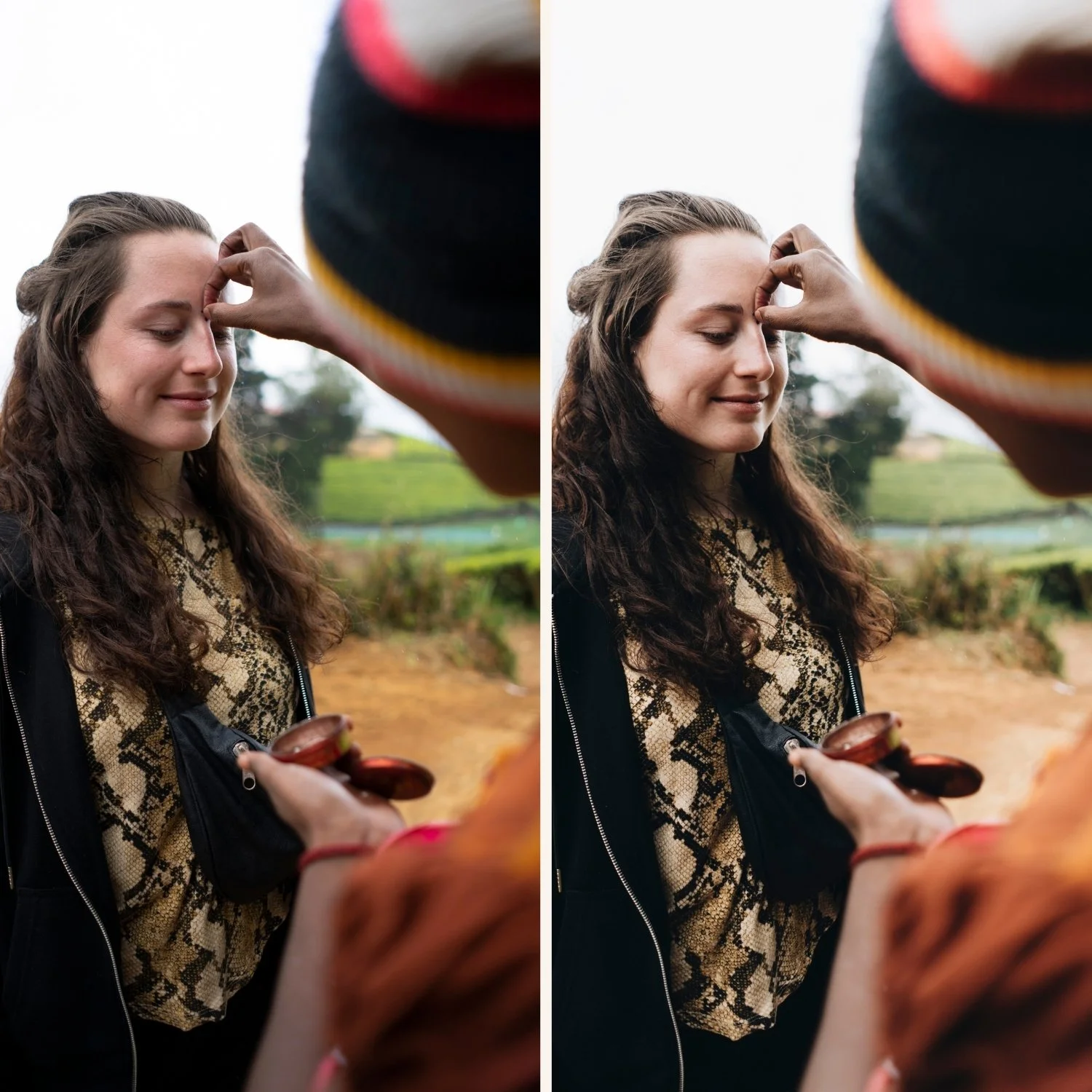
How to create a preset in Lightroom Classic
Step 1 — Edit a photo to your desired look. Start with a well-exposed photo in good light. Edit it to the look you want to save — adjust tone curve, color grading, HSL, grain, and any other settings.
Step 2 — Open the New Preset dialog. In the Develop module, go to Develop > New Preset (Cmd+Shift+N on Mac, Ctrl+Shift+N on Windows). Or right-click in the Presets panel and select "Create Preset."
Step 3 — Name your preset. Give it a clear, descriptive name. "Warm Film Portrait" is better than "My Edit 1."
Step 4 — Choose which settings to include. A checkbox list appears. This is important — see the section below on what to include and exclude.
Step 5 — Choose a folder. Either select an existing group or create a new one. Click "Create."
Your preset is now saved in the Presets panel and applies to any photo in one click.
How to create a preset in Lightroom Mobile
Step 1 — Edit a photo to your desired look. Apply all your adjustments to a photo — preset, manual adjustments, everything.
Step 2 — Tap the three dots. In the editing panel, tap the three dots in the top right corner.
Step 3 — Tap "Create Preset." Name it, choose a group, and tap the checkmark to save.
Your preset now appears in the Presets panel for any photo you edit in Lightroom Mobile.
What settings to include in your preset
This is the most important decision when creating a preset.
Always include:
Tone Curve — the foundation of any film look
Color Grading — shadow and highlight toning
HSL (Hue, Saturation, Luminance) — color channel adjustments
Calibration — if you have adjusted the Camera Calibration panel
Grain — if grain is part of your look
Vignetting — if you use a consistent vignette
Include carefully:
White Balance — only include if you always shoot in the same lighting conditions. If you include white balance, the preset will change the white balance of every photo you apply it to. Usually it is better to exclude white balance and set it manually per photo.
Exposure — usually exclude. Every photo has a different correct exposure. Including a specific exposure value will make some photos too bright and others too dark.
Usually exclude:
Crop — almost never include unless you always crop to the same ratio
Spot Removal — never include
Local Adjustments (masks, brushes, gradients) — these are photo-specific
Building a preset system vs a single preset
One preset handles one lighting condition. If you shoot in varied light — outdoor sun, window light, overcast, golden hour — one preset looks different in every scenario.
A preset system covers every scenario you shoot in. Start with a base preset, then create variations:
Base preset: your core look with all color and tone adjustments
Bright variation: base + slight exposure lift + reduced highlights
Warm variation: base + slight Temperature increase + enhanced warm tones
Overcast variation: base + exposure lift + Temperature increase to compensate for cool ambient light
Indoor variation: base + Temperature increase for tungsten/LED light
This is exactly how professional preset collections work. The Analog Film Archive has 10 presets — not 10 different looks, but 10 calibrated variations on the same analog color philosophy for different lighting conditions.
Using a professional preset as your starting point
The fastest way to create your own preset is to start with a professionally calibrated preset and customize it for your specific style.
Download the free A6 preset. Apply it to one of your photos. Adjust the white balance, exposure, and any specific color channels to match your vision. Then save as a new preset. You get the professional calibration as a foundation and add your personal style on top.
If you want a complete reference library of professionally calibrated presets, the Studio Archive gives you 130+ starting points across every film style.
EXPLORE THE STUDIO ARCHIVE — $89
FAQ
Can I share my Lightroom preset with others?
Yes. In Lightroom Classic, right-click your preset and select "Export." This saves it as an XMP file that anyone can import. In Lightroom Mobile, go to the preset, tap the three dots, and select "Share."
How many presets should I have?
As few as possible. A system of 5-10 presets covering your common scenarios is more useful than 200 random presets. Fewer, better presets create more consistency.
Do presets work on every photo?
Yes, but they look different on different photos depending on the starting exposure and white balance. Always adjust exposure and white balance after applying a preset.
Can I create a preset from a DNG file?
Yes. Import the DNG into Lightroom, open it, and the settings are visible in the Develop module. Save as a preset from there.