How to Get the Film Look on Any Camera
How to Get the Film Look on Any Camera
The most persistent myth about film-look photography is that it requires a specific camera. Photographers credit their Fujifilm for the film tones. They assume the mirrorless shooter they admire must be using vintage lenses. They suspect their iPhone is fundamentally incapable of the look they want. None of this is true, and understanding why changes everything about how you approach film aesthetic editing.
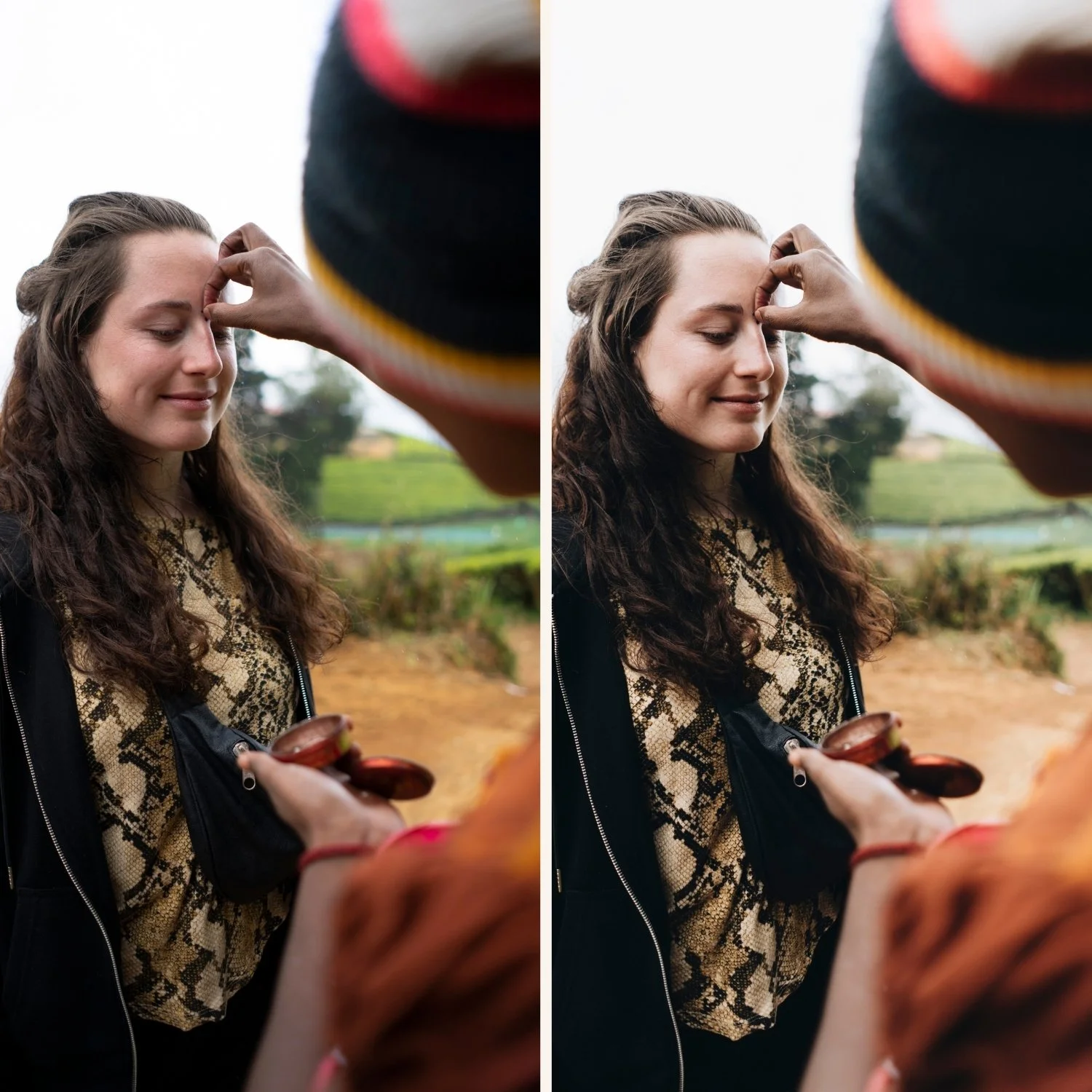
Film-look photography is a set of Lightroom adjustments, not a camera property. The camera captures light and records it as a digital file. Lightroom transforms that file. The transformation is where the film look lives, and it applies equally to RAW files from every camera that exists — Fujifilm, Canon, Sony, Nikon, iPhone, Android, and every other device that shoots a usable RAW or JPEG file.
The one genuine difference between cameras is the starting point they provide. Some cameras produce a starting file that is easier to push in the film direction. But this is a workflow preference, not a capability limitation. Every modern camera can produce the film look.
What the Film Look Actually Requires
Five properties create the film look. Understanding them removes the camera dependency entirely.
A lifted black point — film photography never produces pure black because film base density prevents the darkest areas from going completely absent. This is replicated in Lightroom with a slight Blacks lift.
Soft highlight roll-off — film compresses bright areas gradually rather than clipping abruptly. This is replicated with Highlight and Whites reductions plus a Tone Curve adjustment that compresses the top of the range.
Restrained, organic color — film does not render color as vividly as digital cameras. Green saturation in particular is much lower in film photography. This is replicated with targeted HSL adjustments.
Smooth midtone contrast — film contrast is layered through the Tone Curve rather than globally applied. The Contrast slider is reduced, the Tone Curve provides separation.
Film grain — organic texture that unifies the image and reinforces the film quality.
None of these require a specific camera. Every RAW file from every camera has the tonal data to support all five adjustments.
Camera-Specific Starting Points
Different cameras produce different starting points for film editing, but all of them are workable.
Fujifilm cameras are frequently cited as having a built-in film look, particularly when using the in-camera film simulation modes (Classic Chrome, Provia, etc.). What these simulations do is apply a color rendering profile that moves in the film direction. When shooting RAW, the Fujifilm starting point is actually more neutral than the JPEG. Film simulation modes apply to JPEGs, not RAW files. If you shoot RAW on a Fujifilm, you are starting from approximately the same neutral point as any other camera.
Canon cameras have a warm color science that sits naturally within the film aesthetic. The warm rendition of oranges and reds means less Orange Saturation reduction is needed compared to Sony files. Canon RAW files are generally easy starting points for warm film editing.
Sony cameras have a slightly cooler and more neutral color science, with a characteristic cyan-green shift in foliage and a cooler rendering of skin tones. This requires two additional adjustments: Green Hue shifted toward yellow and Green Saturation reduced more aggressively. The film look is equally achievable but requires a slightly different HSL calibration.
iPhone and Android cameras are JPEG-first devices with significant computational processing applied in-camera. ProRAW on iPhone gives you more tonal latitude. For JPEG phone photography, apply presets at 80-85% strength rather than 100% to compensate for the in-camera processing that is already baked in.
Nikon cameras have a color science similar to Canon, slightly warmer and more forgiving for film aesthetic work than Sony files.
The Universal Workflow
This workflow works on RAW files from any of the above cameras.
Step 1 — Exposure calibration. Pull Highlights to -20 through -40. Reduce Whites by -10 to -20. Keep Shadows between 0 and -15. This creates the tonal space for the film adjustments to work correctly.
Step 2 — Tone Curve. Reduce global Contrast to 0 or slightly negative. Build a soft S-curve: lower midtones compressed slightly, upper midtones lifted gently, highlight point protected. Shadow point lifted to +15 on the curve. This replaces digital contrast with film contrast.
Step 3 — HSL adjustments. Green Saturation -15 to -25, Green Hue toward yellow. Orange Saturation -10 to -20, Orange Luminance +5 to +15. Yellow Saturation -5 to -15. Blue Saturation -5 to -15. These are starting points — adjust based on your specific camera's color science.
Step 4 — Color Grading. Highlight Hue 40-50, Saturation 5-10. Shadow grading close to neutral. This adds the film warmth in the highlight range without a global Temperature increase.
Step 5 — Clarity and grain. Clarity at 0 or slightly negative (-5 to -10). Grain at Amount 15-25, Size 20-30, Roughness 40-60.
Why Presets Sometimes Look Different on Different Cameras
When a preset produces the film look perfectly on one camera and not on another, it is usually for one of two reasons. First, the white balance calibration of the two cameras differs, and the preset's color grading is interacting differently with each starting point. Fix white balance consistently before applying. Second, specific HSL calibrations within the preset suit one camera's color science better than another. Understanding which channels need adjustment for your specific camera allows you to create a per-camera version of any preset.
This is also why some photographers have better results with presets from creators who shoot the same camera. The preset was calibrated against that camera's specific color rendering. It is not that the camera is better — it is that the starting point is more similar.
FAQ
Can I get the film look from JPEG files?
Yes, but with more limitations than RAW. JPEG files have less tonal latitude, so highlight recovery and shadow adjustment are less flexible. Apply presets at 80-85% strength on JPEG and keep the adjustments moderate rather than pushing them hard.
Do Fujifilm film simulations replace Lightroom editing?
Fujifilm film simulations produce a film-leaning result from JPEG files quickly and conveniently. For photographers who want full Lightroom control — custom Tone Curve, precise HSL adjustments, grain calibration — shooting RAW and editing in Lightroom produces more customizable results. Many Fujifilm photographers shoot RAW + JPEG to keep both options available.
Why does my Sony camera need different settings than my friend's Canon?
Sony and Canon have different color science philosophies. Sony renders green more vividly and with a slightly cyan bias. Canon renders warm tones more naturally for film aesthetics. The same preset applied to both will need different Green Hue and Green Saturation adjustments to produce equivalent results.
Is there a film look that works on every camera with no adjustment?
A well-calibrated base preset gets close across varied cameras in consistent lighting. Per-camera calibration of the Green channel and a consistent white balance routine closes the remaining gap. No single preset setting works identically on every camera without adjustment.
Try the film workflow on your own camera:
Download the free Analog Film preset and apply the per-camera adjustments described above.
For a complete collection calibrated across multiple lighting conditions, the Analog Film Archivecovers versatile film quality for any camera and any shooting scenario.