Why Consistent Editing Matters More Than Good Editing
Why Consistent Editing Matters More Than Good Editing
The best-edited photo in your portfolio does not make you a better photographer in the eyes of someone browsing your work. What makes you a better photographer is whether your portfolio reads as the work of one person with a clear vision — or as a collection of technically competent images that could have been produced by anyone.
Consistency in editing is not a substitute for quality. It is what makes quality legible.
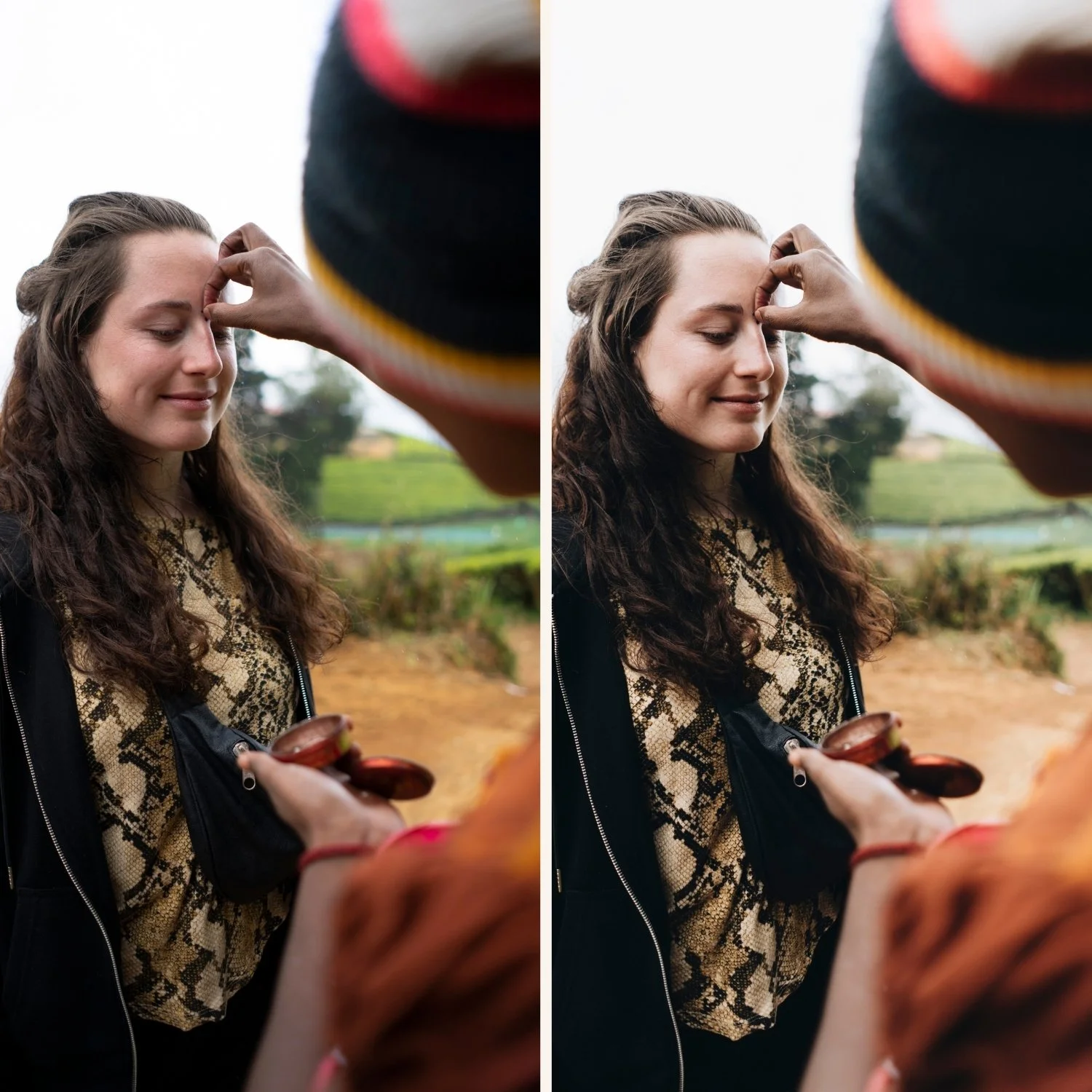
Why consistency is more visible than quality
Photography audiences — whether clients, social media followers, or editorial contacts — evaluate portfolios through pattern recognition before individual assessment. The first question a viewer answers when looking at a portfolio is not "is this technically good?" It is "do these belong together?"
A portfolio of consistently edited average photos reads as more professional than a portfolio of inconsistently edited excellent photos. This is counterintuitive but reliably true.
The reason: consistent editing signals intentionality. It tells the viewer that the photographer knows what they want their work to look like and can produce it reliably. Inconsistency signals the opposite — that the work is the result of varying impulses rather than a deliberate direction.
For client photographers specifically, consistency is a proxy for reliability. Clients who hire based on a portfolio are implicitly asking: "will I get work that looks like this?" Consistent editing answers that question clearly. Inconsistent editing raises doubt.
The three ways inconsistency appears
Colour temperature inconsistency. Some photos are warm, some are neutral, some are cool within the same feed or portfolio. Often the result of not correcting white balance before applying a preset, or of choosing different presets per mood.
Tonal character inconsistency. Some photos have open, lifted shadows; others have deep, atmospheric shadow depth. The feed reads as two or three different editing directions competing.
Saturation level inconsistency. Some photos are muted and organic; others are vivid and bright. Often the result of post-export editing in Instagram or applying additional filters on top of Lightroom work.
Any one of these by itself is manageable. All three together produce a portfolio that no viewer can attach a clear identity to.
What consistency does not mean
Consistency does not mean identical editing. Every photo has different exposure, different white balance, different subject matter, different light. Consistent editing allows for all of these variables.
What consistency means is that the visual identity — the colour temperature direction, the shadow character, the saturation level, the grain quality — is the same across all photos. The variables are handled within the consistent framework, not outside it.
A portrait in golden hour and a street photo in overcast shade can have completely different white balance and exposure and still be immediately recognisable as coming from the same photographer — if the editing identity is consistent.
How to achieve consistency in practice
One base preset for everything. Not a preset per scenario, not a preset per mood. One preset that represents the direction, applied to every photo as the foundation. The preset is the consistency. Per-photo Exposure and White Balance adjustments are applied on top.
White balance fixed before the preset. The same preset on a 4,800K white balance versus a 5,600K white balance produces different colour results. Consistent white balance correction before applying — daylight to 5,200-5,400K, overcast to 5,800-6,200K — ensures consistent preset output.
Export consistently. Applying a Lightroom preset and then adding Instagram filters, adjusting brightness in the platform, or using iPhone's built-in editing tools on top of the export all introduce variation after the consistent edit. Export from Lightroom and post without further adjustment.
Consistency as a professional differentiator
The photographers who build the most recognition do so through style consistency over time. The accumulated effect of consistent editing across hundreds of posts or dozens of client deliverables creates a visual identity that is immediately recognisable — the equivalent of a visual signature.
This recognition compounds. Each new photo that fits the consistent identity reinforces the visual expectation. A viewer who has seen 50 consistently edited photos from a photographer and then sees a 51st immediately recognises the work as belonging to that photographer, even without a name attached.
This is the long-term value of editing consistency: it builds a reputation that operates independently of individual photo quality. Good individual photos come and go. A consistent visual identity accumulates.
The Analog Film Archive for consistent editing
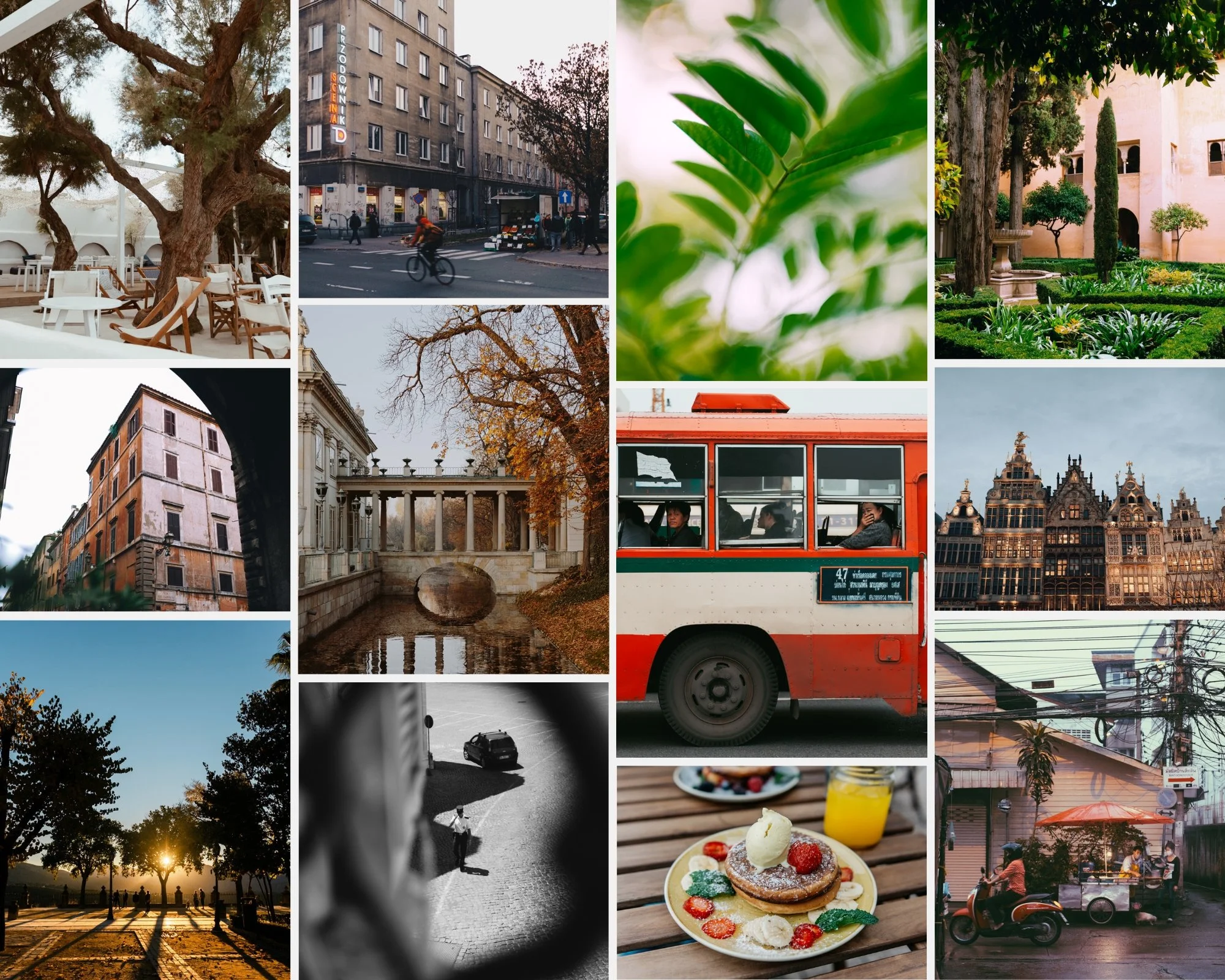
The Analog Film Archive is built as a coherent collection — ten presets sharing the same colour philosophy, tonal foundation, and grain character. Using presets from the same collection to cover different scenarios (A6 for portraits, A4 for golden hour, A9 for urban) produces variation within a consistent identity rather than stylistic inconsistency.
Explore the Analog Film Archive — $27 →
For photographers who want the full range across warm, moody, cinematic, and black-and-white directions while maintaining consistency, the Studio Archive contains every TES collection in one purchase.
FAQ
Does consistency mean I can never experiment?
Experimentation belongs in personal projects separate from the main portfolio or feed. Test new directions on unpublished work until a new direction is developed enough to commit to. Then the transition happens as a deliberate decision, not as scattered variation.
What if my best individual photos use a different editing direction?
If the photos that feel most like your best work use a different direction from your current consistent style, that is useful information. It may be that your instinctive direction is different from your formalised one. Consider whether the best photos' editing direction is worth committing to consistently.
How long before consistency makes a visible difference to how my work is perceived?
Approximately 20-30 consistently edited photos accumulating in a feed or portfolio. Within that volume, the visual pattern becomes apparent to viewers even if they cannot articulate what they are noticing.