Lightroom vs Capture One for Film Look Photography (2026)
Lightroom vs Capture One for Film Look Photography (2026)
Capture One is frequently described as having better colour science than Lightroom. For certain types of photography this is accurate. For film look photography specifically, the comparison is more nuanced — and the answer depends on what you prioritise in your workflow. This is an honest assessment of both.
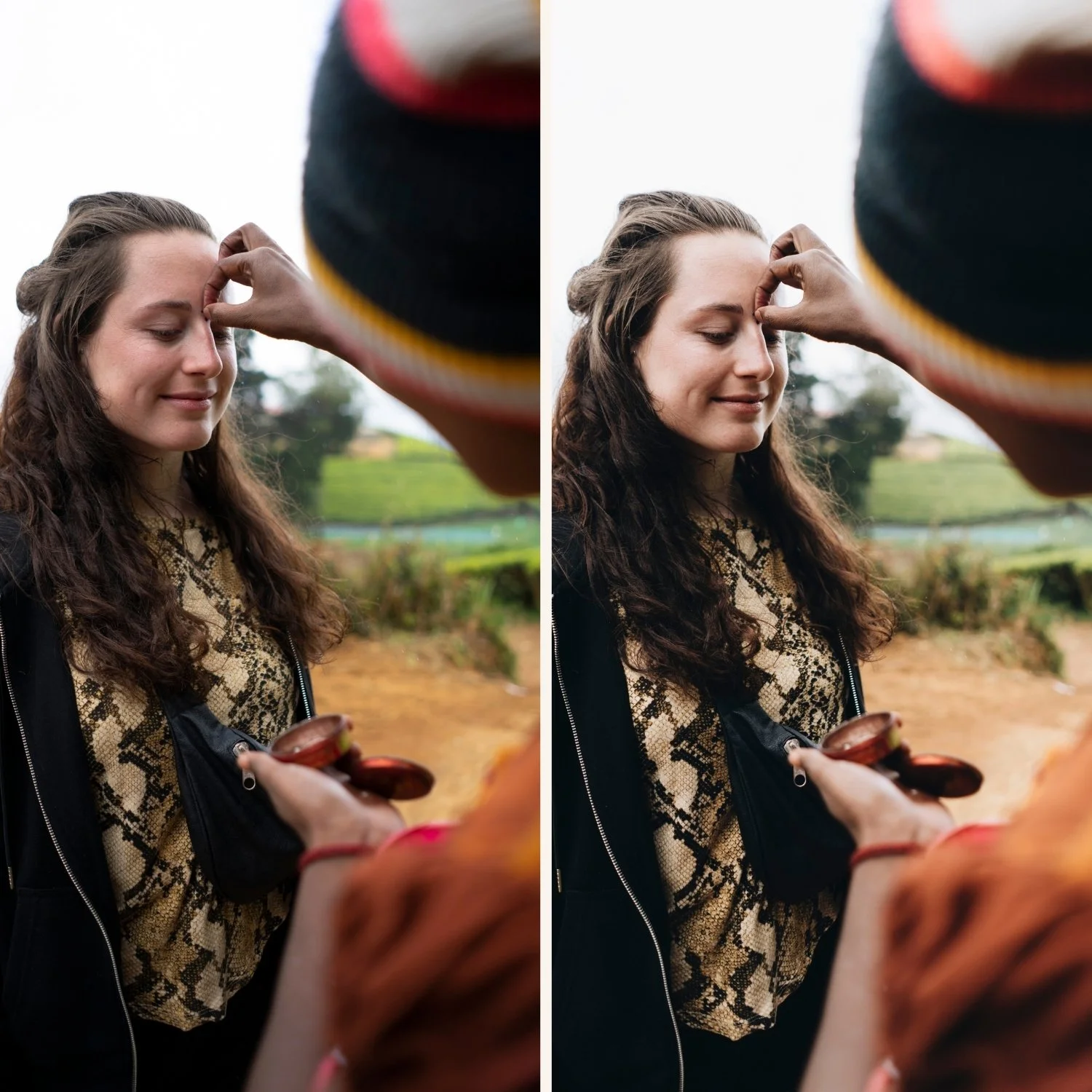
Where Capture One is genuinely better
Colour Editor precision. Capture One's Colour Editor allows you to select a specific colour area in the image — using a picker rather than a fixed hue range — and adjust its hue, saturation, and lightness independently with a mask showing exactly which pixels are affected. This precision exceeds Lightroom's HSL panel for targeted colour work. For commercial photographers who need to match specific brand colours or adjust narrow colour ranges, this is a real advantage.
Skin tone rendering out of the box. Capture One's default colour science renders skin tones with more natural warmth than Lightroom's Adobe Color profile. Without any adjustment, a portrait in Capture One often looks closer to natural skin quality than the same image in Lightroom at default settings.
Tethered shooting. Capture One is the industry standard for studio tethering — connecting a camera directly to the computer and viewing images immediately as they are captured. The speed and reliability is superior to Lightroom's tethered workflow.
Layers and local adjustments. Capture One's layer-based local adjustment system is more flexible than Lightroom's masking tools for complex targeted editing. Multiple layers with independent opacity and masks give more control over specific areas.
Style export and sharing. Capture One allows photographers to package their editing styles (the equivalent of Lightroom presets) and share them. The Style packs available for Capture One are well-made, but the library is smaller than Lightroom's.
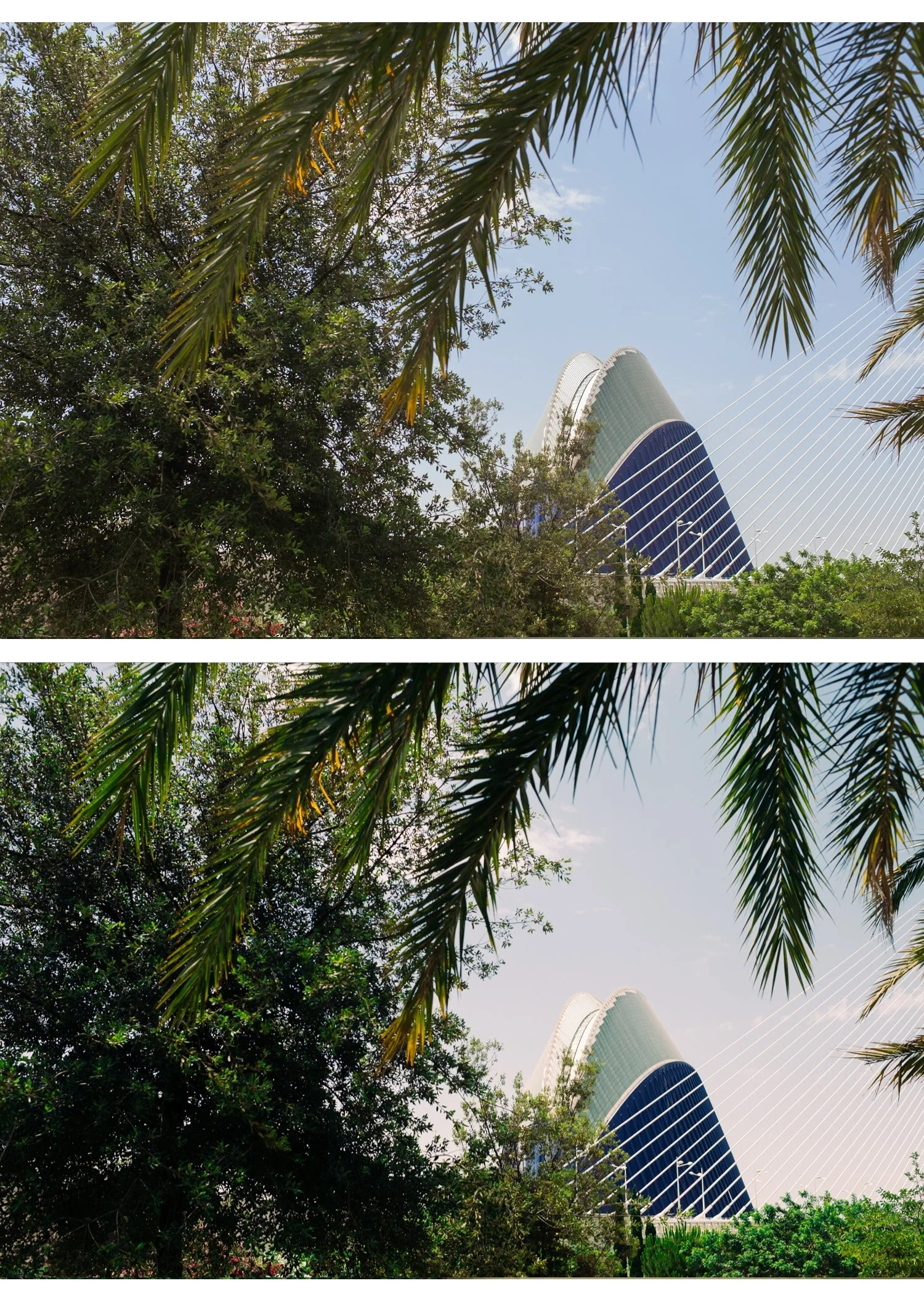
Where Lightroom is better for film look photography
Preset ecosystem. The entire film preset market is built around Lightroom's DNG and XMP format. Every TES preset, every major film look preset collection, and decades of community-developed presets exist in Lightroom format. Capture One uses its own Style format — DNG and XMP presets do not convert, and the film preset library for Capture One is a fraction of what exists for Lightroom.
For film look photography, this matters significantly. The specific colour calibration, Shadow Color Grading values, and grain settings in film presets have been developed and tested in Lightroom over years. Recreating equivalent quality in Capture One requires building from scratch.
Color Grading panel. Lightroom's Color Grading panel — separate shadow, midtone, and highlight colour wheels with Blending and Balance controls — is the primary tool for the warm shadow floor and layered tonal warmth of the film look. The specific shadow amber quality (Hue 35-42, Saturation 10-16, Blending 45-55) is the most defining film look colour adjustment. Capture One has equivalent functionality in its Colour Balance tool, but Lightroom's implementation is more intuitive and its output in this specific area is well-suited to the film look workflow.
Mobile integration. Lightroom Mobile is free with full editing capability, preset support, and sync with Lightroom Classic. For photographers who edit on both desktop and mobile — the majority of photographers who use film presets — this integration is a significant practical advantage. Capture One's mobile application is limited in comparison.
Price. Lightroom is included in the Photography Plan at a lower monthly cost than Capture One's full subscription, particularly for photographers who do not need the advanced commercial features.
Grain emulation. Lightroom's grain tool (Amount, Size, Roughness) is specifically well-suited to the three-parameter calibration that organic film grain requires. Capture One's grain is capable but less precisely calibrated in the Roughness dimension that distinguishes organic film grain from uniform digital grain.
The workflow comparison
| Criteria | Lightroom | Capture One |
|---|---|---|
| Film preset availability | Extensive ecosystem | Limited |
| Shadow Color Grading | Excellent | Good |
| HSL / Colour Editor precision | Good | More precise |
| Skin tone out of box | Good with preparation | Better default |
| Mobile editing | Full featured, free | Limited |
| Grain emulation | Excellent | Good |
| Tethered shooting | Adequate | Industry standard |
| Local adjustments | Good (masking tools) | Better (layers) |
| Price | Lower | Higher |
The verdict for film look photography
Use Lightroom if you want to use an established film preset collection, edit on both desktop and mobile, and prioritise workflow efficiency over maximum colour precision. For the majority of film look photographers — portrait, travel, lifestyle, street — Lightroom with a quality preset collection produces better practical results because the entire ecosystem is designed for exactly this workflow.
Use Capture One if you are a commercial or studio photographer who prioritises maximum colour precision above all else, does not need the film preset ecosystem, and is willing to invest time in building your own film look workflow from scratch.
The key insight: Capture One's colour science advantages are genuine but they benefit photographers who build their own colour grades manually. For photographers using the film preset ecosystem — the approach this guide and TES presets are built for — Lightroom's preset support and Color Grading tools are more suited.
The Analog Film Archive for Lightroom
The Analog Film Archive is calibrated specifically for Lightroom's colour engine. Ten presets covering the full film look range from clean portrait to atmospheric moody.

FAQ
Can I import Lightroom presets into Capture One?
No. The DNG and XMP preset formats are incompatible with Capture One's Style format. You would need to recreate the adjustments manually.
Is Capture One free?
No. Capture One offers a 30-day free trial. After that, the subscription pricing is higher than Lightroom's Photography Plan.
Does Capture One work with Fujifilm film simulations?
Yes — Capture One has excellent Fujifilm support and its own film simulation interpretations. For Fujifilm photographers specifically, Capture One is worth evaluating alongside Lightroom.
Can I use Lightroom for some work and Capture One for others?
Yes. Some photographers use Lightroom for high-volume portrait and event work (where preset efficiency matters) and Capture One for commercial studio work (where colour precision matters). The two are not mutually exclusive.