Best Lightroom Settings for Skin Tones — Complete Guide (2026)
Best Lightroom Settings for Skin Tones — Complete Guide (2026)
Skin tones are the hardest thing to get right in Lightroom. Too warm and skin looks orange. Too cool and it looks grey. Too much clarity and it looks harsh and textured. The right settings create skin that looks warm, healthy, and natural — without the processed quality that most photo editing produces.
This guide covers the exact Lightroom settings for natural, flattering skin tones across fair, medium, olive, and dark skin.
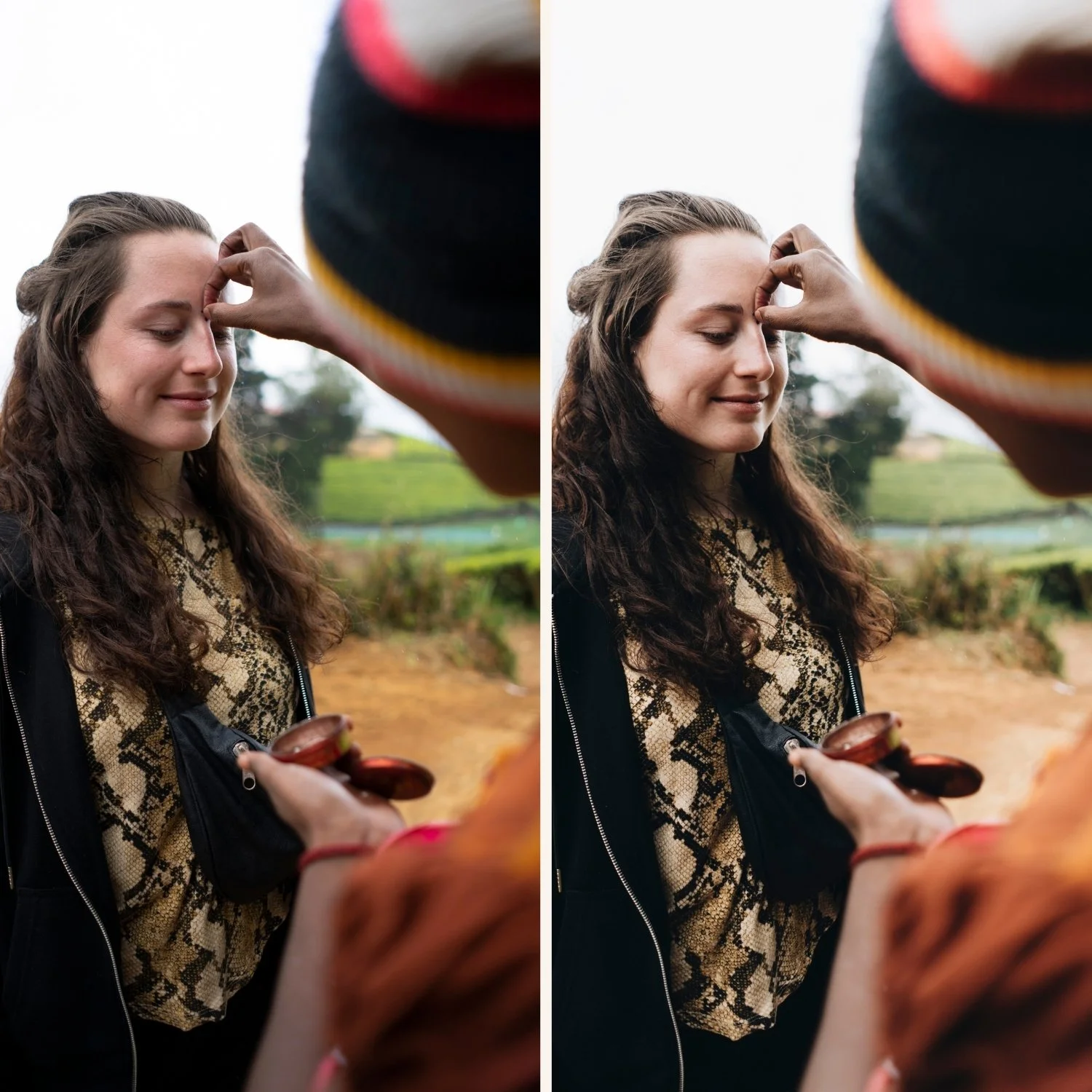
The five most important settings for skin tones
1. Orange Luminance — the most important adjustment
In the HSL panel under Luminance, the Orange slider controls the brightness of warm skin tones. This is the single most important skin tone adjustment in Lightroom.
Lifting Orange Luminance brightens skin independently of everything else — it does not add warmth or change color, only brightness. This creates a natural glow that is fundamentally different from simply increasing overall exposure.
Settings by skin tone:
Fair skin: Orange Luminance +10 to +15
Medium skin: Orange Luminance +12 to +18
Olive skin: Orange Luminance +15 to +20
Dark skin: Orange Luminance +20 to +30
2. Clarity — remove digital harshness
Positive clarity increases micro-contrast, which makes skin texture appear harsh and digital. This is the most common mistake in portrait editing.
For all portrait work, keep Clarity at 0 or negative:
Clarity: -5 to -20 depending on how soft you want the result
3. Orange Saturation — warmth without orange casts
The Orange Saturation slider controls the vividness of warm skin tones. Too high creates orange-looking skin. The sweet spot is warm but natural.
Settings:
Fair skin: Orange Saturation 0 to +5
Medium skin: Orange Saturation +5 to +10
Olive skin: Orange Saturation +5 to +10
Dark skin: Orange Saturation -5 to 0 (keep controlled — dark skin reads as more orange at the same saturation level)
4. White balance — the foundation
Wrong white balance is the single biggest cause of bad skin tones. Indoor tungsten light makes skin orange. Overcast light makes skin grey. Fix white balance before any other skin tone adjustments.
See:How to Fix White Balance in Lightroom
5. Red and Orange Hue — shift skin tone direction
The Hue sliders in HSL change the color direction of specific channels without affecting other colors.
To make skin more golden and less orange:
Orange Hue: shift toward yellow (+5 to +10)
To make skin warmer and less pink:
Red Hue: shift toward orange (-5 to -10)
To cool down overly warm skin:
Orange Hue: shift toward red (-5 to -10) — counterintuitively this moves orange away from the skin tone frequency
Settings by skin tone
Fair skin (light/pale tones)
Fair skin is most sensitive to over-warming. The risk is orange casts from warm presets or warm lighting.
Key settings:
Orange Luminance: +12 to +15
Orange Saturation: 0 to +5 (keep conservative)
Clarity: -10 to -15
Temperature: neutral — do not add additional warmth
Check: white areas near skin should read as genuinely white
Medium skin (warm beige tones)
Medium skin handles warmth well and benefits from the natural glow of film presets.
Key settings:
Orange Luminance: +12 to +18
Orange Saturation: +5 to +10
Clarity: -10 to -15
Red Saturation: 0 to -5 (prevent ruddy/flushed quality if needed)
Olive skin (yellow-green undertones)
Olive skin has yellow-green undertones. Over-warming pushes it toward muddy yellow-brown.
Key settings:
Orange Luminance: +15 to +20
Orange Saturation: +5 to +10
Yellow Luminance: +5 to +10
Yellow Saturation: 0 to +5
Clarity: -10 to -15
Avoid: high Green Saturation which can make skin look sallow
Dark skin (deep warm tones)
Dark skin needs the most Orange Luminance lift and the most careful shadow management. Presets designed for lighter skin often make dark skin look flat or muddy.
Key settings:
Orange Luminance: +20 to +30
Orange Saturation: -5 to 0 (keep controlled — dark skin oversaturates more easily)
Blacks: +10 to +20 (preserve shadow detail — never crush blacks on dark skin)
Clarity: -15 to -20 (more than for lighter skin — digital harshness reads more harshly)
Shadows: +15 to +25
Full guide: Best Lightroom Presets for Dark Skin Tones
Skin tone settings by lighting condition
Bright outdoor sun Bright sun can create harsh shadows on skin and blow highlights. Pull Highlights to -30 to -40. Add Orange Luminance +15. Clarity -10.
Overcast outdoor Flat, slightly cool light makes skin look grey. Add Temperature +200 to +300 after preset. Orange Luminance +15. This adds the warmth that overcast light lacks.
Indoor tungsten Very warm orange light. Cool Temperature significantly before applying preset (-600 to -1000). Then add Orange Luminance +12. Without the Temperature correction, adding Orange Luminance on top of already warm light creates excessive orange skin.
Window light The most flattering natural light for skin. Slight warmth to Temperature (+100 to +200). Orange Luminance +12 to +15. Clarity -10.
Golden hour Beautiful light but can push skin toward orange in photos. After preset: Orange Saturation -5 to compensate for the combined warmth of the light and preset. Orange Luminance +12.
The Glow Portrait Archive for skin tones
The Glow Portrait Archive (G-Series) is specifically calibrated for natural skin rendering — Orange Luminance lifted, Clarity at -10 to -15, and Orange Saturation controlled to avoid orange casts.
G1 Clean Glow for versatile portrait work. G2 Warm Glow for golden hour. G3 Vibrant Glow for dark and olive skin tones.
EXPLORE THE GLOW PORTRAIT ARCHIVE — $19.99
Free skin tone starting point
The free A6 preset is the best free starting point for skin tone work — neutral, clean, and calibrated with Orange Luminance lift and Clarity at -10.
FAQ
How do I fix orange skin in Lightroom?
Three adjustments: reduce Orange Saturation by -10 to -15, cool the Temperature slightly, and check that Orange Hue has not drifted toward red. The combination of a warm preset and warm indoor light is the most common cause of orange skin.
What is the best Lightroom setting for natural skin?
Orange Luminance +12 to +20 (depending on skin tone), Clarity -10 to -15, and a correctly set white balance. These three create the foundation of natural skin rendering in any preset.
Why does my skin look grey in edited photos?
Usually caused by overly cool white balance, too much desaturation (Vibrance or Saturation too negative), or a preset calibrated for lighter skin making darker skin look flat. Warm the Temperature slightly and lift Orange Luminance to compensate.
Should I use the Skin Tone selector in Lightroom?
The targeted adjustment tool (the circle icon in HSL that you drag directly on the image) is useful for isolating skin tones precisely. Click on skin in your photo and drag up to brighten or down to darken that specific tone range.