Why Nikon Greens Look Different in Lightroom — And How to Fix It (2026)
Why Nikon Greens Look Different in Lightroom — And How to Fix It (2026)
Nikon cameras render outdoor greens with a warm, vivid yellow-green quality that looks accurate in direct viewing but reads as slightly vivid and unnatural in Lightroom editing — particularly when applying film presets that reference the more muted, organic green of analog film photography.
The fix is two adjustments. This guide explains why it happens and exactly how to fix it.
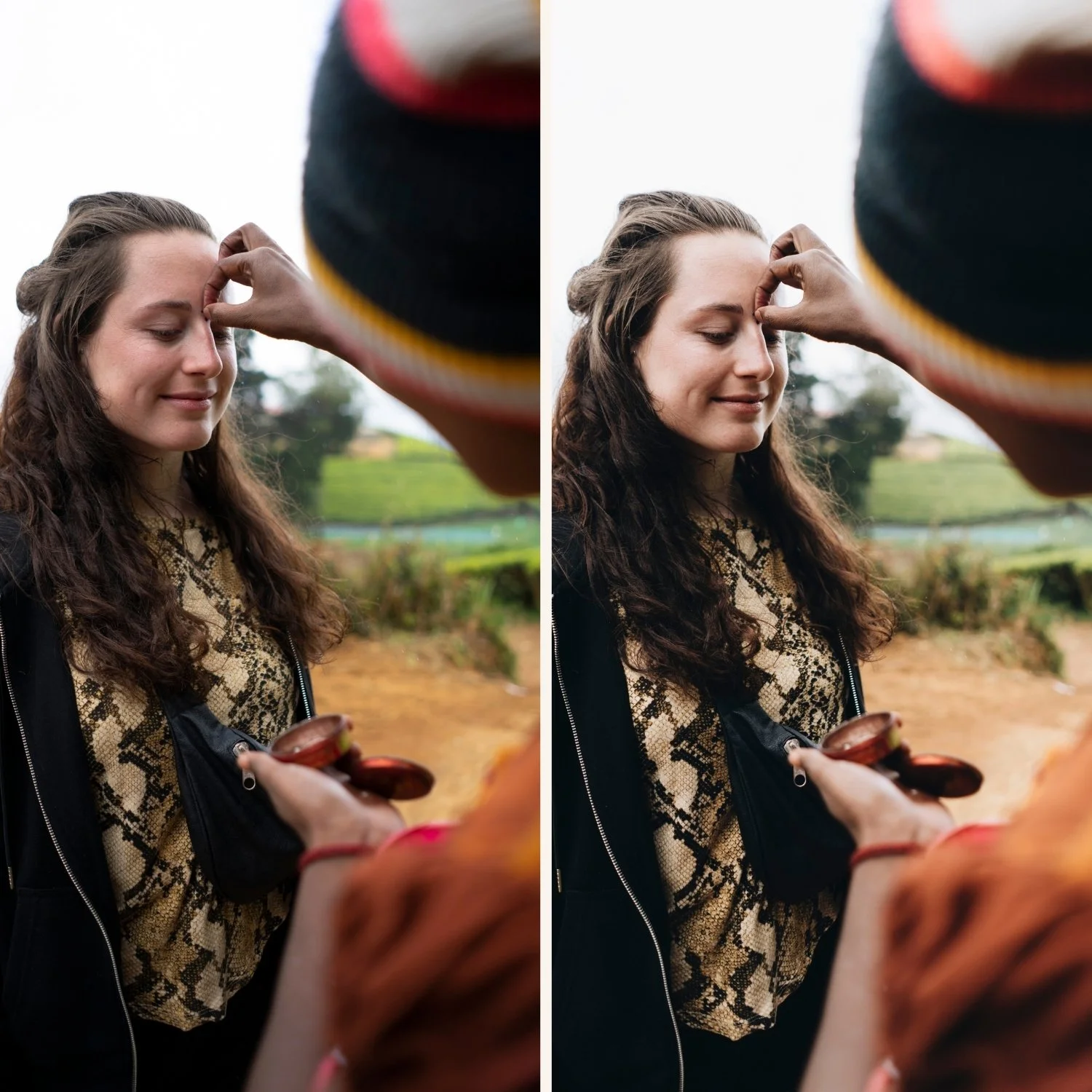
Why Nikon greens look different
Nikon's image sensors have a specific spectral sensitivity in the green channel that renders foliage with a warm, slightly yellow quality. This is intentionally accurate — Nikon engineers the green channel to match human visual perception of outdoor vegetation.
The problem in Lightroom is that film photography did not render green this accurately. Classic film stocks like Kodak Portra, Fuji 400H, and most professional color negative films had a slightly imprecise green channel that rendered foliage as warmer and more muted — organic rather than vivid.
When you apply a film preset calibrated for this analog green quality to a Nikon file, the Nikon's accurate-vivid green fights against the preset's expectation of muted-organic green. The result looks more vivid than intended.
Fix 1 — Green Saturation: the main adjustment
Color Mix panel, Green Saturation: -15 to -20
This is the most important fix. Reducing Green Saturation removes the vivid quality of Nikon's outdoor greens without changing the hue character. The result is the muted, organic green of film photography.
This adjustment alone fixes 80% of the Nikon green problem.
Fix 2 — Camera Calibration profile
Go to Camera Calibration at the bottom of the Develop module. Change from Adobe Color to Camera Neutral.
Adobe Color renders Nikon files with slightly boosted contrast and saturation. Camera Neutral gives a flatter, more film-friendly starting point where the green channel is less amplified.
Apply Camera Calibration before Color Mix adjustments.
Fix 3 — Green Hue fine-tuning
After the saturation fix, check if the green still reads as too warm-yellow or too teal-cool.
If greens look too vivid yellow: Green Hue -5 to -8 toward teal. If greens look too cool or teal: Green Hue +5 to +8 toward yellow.
The target is the organic, slightly warm but not vivid green quality of film photography. The exact direction depends on your Nikon model and your specific preset.
Also fix: Yellow Saturation
Nikon's warm-yellow green rendering also affects the Yellow channel in Color Mix.
Yellow Saturation: -5 to -10. This reduces the warm-yellow overlap between the green and yellow channels that makes outdoor Nikon photography look vivid.
The complete Nikon green fix
Applied in order before any preset:
Camera Calibration → Camera Neutral
Green Saturation → -18
Yellow Saturation → -8
Apply preset
Check Green Hue and fine-tune if needed
Total time: 30 seconds. Saves significant time versus fighting the vivid green on every outdoor photo.
Saving as part of a preseT
Include these Green and Yellow adjustments in your Nikon base preset. Every outdoor photo benefits from the same adjustment — there is no reason to apply it manually per photo.
For the full Nikon film look workflow: Film Look on Nikon — Step-by-Step Guide
FAQ
Why do Nikon greens look different from Canon or Sony greens in Lightroom?
Each manufacturer's green channel sensitivity is calibrated differently. Canon greens are warm and slightly vivid. Sony greens are vivid and slightly cyan. Nikon greens are warm-yellow vivid. Film presets are calibrated for the muted, organic green of analog photography — none of the digital camera greens match this without adjustment.
Does this fix work on Nikon Z and D series cameras?
Yes the same Green Saturation and Camera Neutral fixes apply across Nikon Z-series mirrorless and D-series DSLR cameras. The exact Green Hue fine-tuning may vary slightly between models.