How to Build a Consistent Mobile Editing Style (2026)
How to Build a Consistent Mobile Editing Style (2026)
A consistent editing style is what separates a professional-looking feed from a random collection of photos. It is not about technical perfection on individual photos — it is about every photo in your library looking like it was made by the same person with the same vision.
Building that consistency takes four steps.
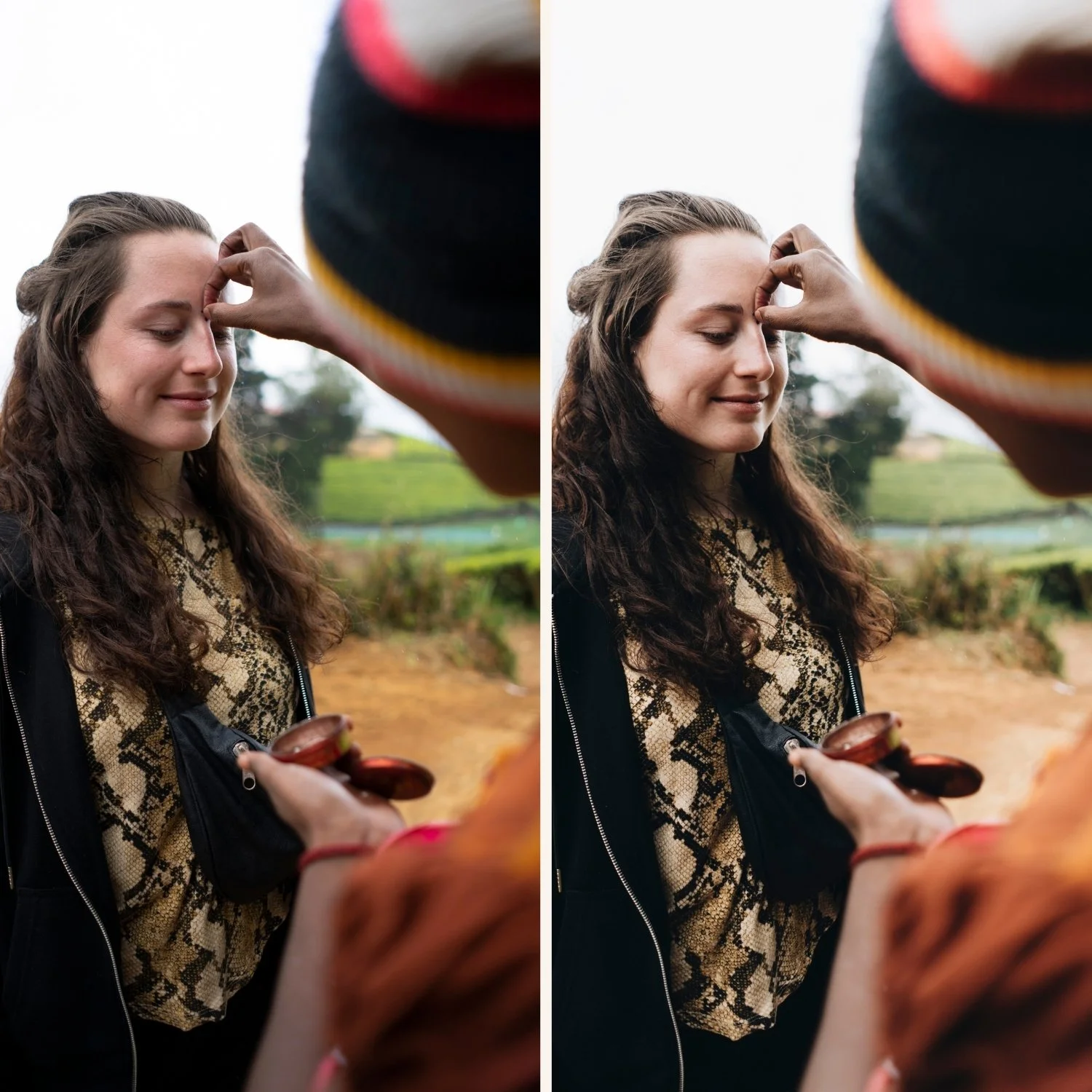
Step 1 — Choose one direction and commit
The most common consistency problem is not the editing technique. It is switching directions. Clean one week, moody the next, bright and airy after that. The result looks like three different photographers.
Choose one of these four directions and commit for a minimum of three months:
Clean analog film. Natural, timeless, versatile. Works for portrait, travel, and lifestyle across every lighting condition.
Moody cinematic. Deeper shadows, muted color, atmospheric depth. Works for street, travel, and editorial photography.
Bright and airy. High-key, luminous, clean. Works for lifestyle, portrait, and Instagram content.
Muted luxury. Desaturated, sophisticated, restrained. Works for fashion, architecture, and editorial work.
If you are not sure which one fits your photography: download the free A6 (clean analog) and M5 (moody). Apply both to twenty photos. One will feel more right than the other.
Step 2 — Build a small preset system
One preset handles one lighting condition. If you shoot in varied light, you need 3-5 presets on the same color philosophy that cover your most common scenarios.
For clean analog film:
A6 for everyday neutral conditions
A4 for warm golden hour
A3 for overcast and moody conditions
For moody:
M4 for moderate moody
M5 for warm dark moody
M6 for maximum dramatic
All from the same collection so every preset shares the same color foundation. Switch between them as the light changes and your gallery stays consistent.
Step 3 — Fix the same things every time
Inconsistency usually comes from fixing things differently per photo. Establish a fixed workflow:
Fix exposure first — always
Fix white balance — always
Apply preset — always the same system
Fine-tune skin tones — Orange Luminance and Saturation
Check highlights — pull back if clipping
Apply this sequence to every photo without exception. The repetition creates consistency.
Step 4 — Review your gallery monthly
Once a month, look at your last 50-100 edited photos in grid view. Look for outliers — photos that are noticeably different from the others. Open each one and identify what makes it look different. Is it exposure? White balance? Wrong preset applied?
Fix the outliers and identify the pattern. Most inconsistency comes from a specific scenario — indoor photos, overcast days, strong backlighting — where the standard workflow needs a specific adjustment.
FAQ
How long does it take to build a consistent editing style?
Three months of consistent application. The first month you are finding your direction. The second month you are building the habit. The third month it becomes automatic.
Should I edit older photos to match my new style?
Not necessarily. A clean transition point — this month I changed my editing direction — is more professional than a half-edited back catalog. Focus on consistency going forward.