Best iPhone Settings for Natural Skin Tones in Lightroom (2026)
iPhone cameras process skin tones toward warm orange to make casual photos look healthy on screen. For film-style editing in Lightroom, this warm base combined with a warm preset creates very orange skin. This guide covers the exact Lightroom settings that produce natural, warm, film-quality skin tones on iPhone photos.
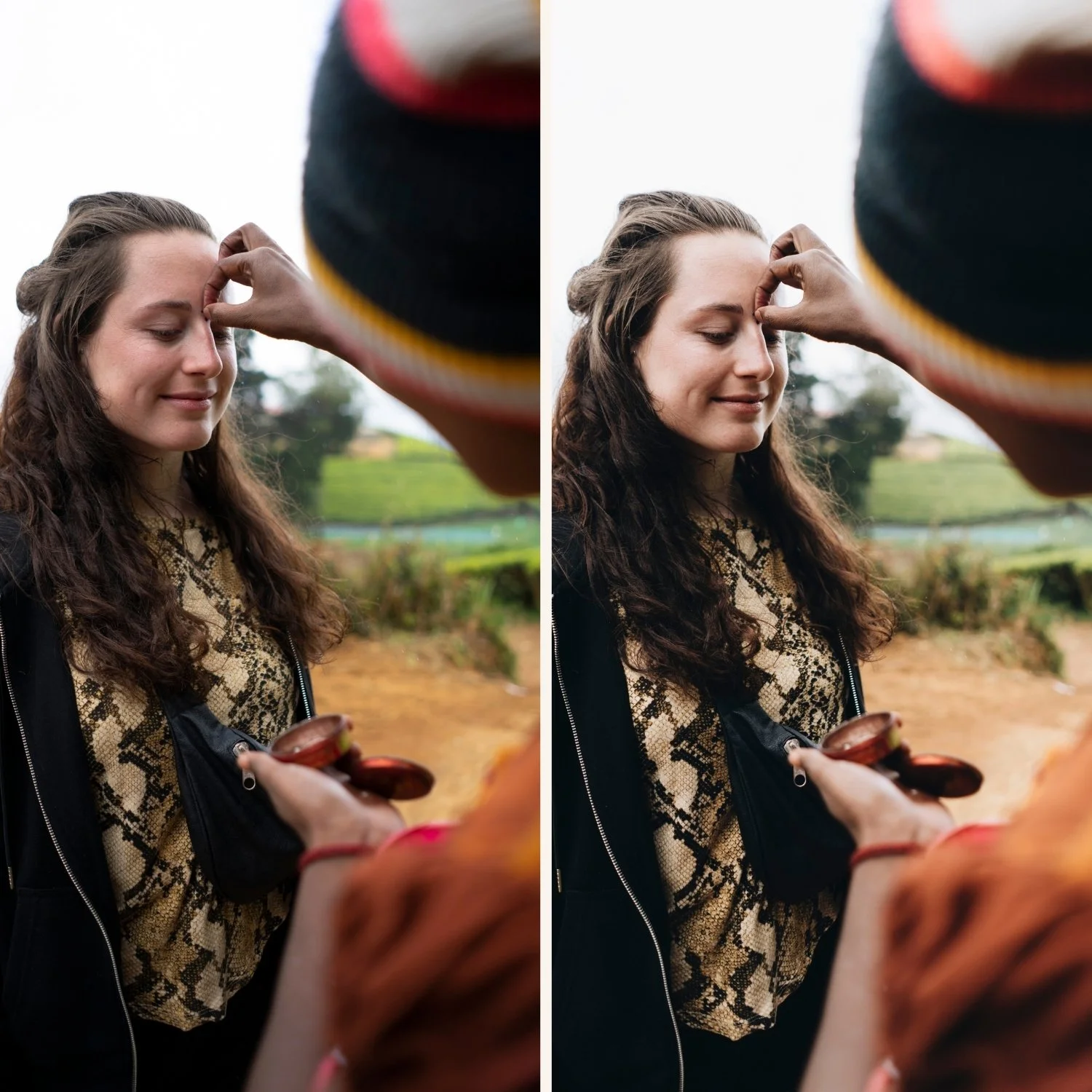
Why iPhone skin tones look orange in editing
Three things stack to create orange iPhone skin in Lightroom.
iPhone's computational photography boosts orange and warm tones automatically. This is baked into every standard JPEG before Lightroom sees it.
Warm white balance from indoor lighting adds another layer of warmth. If the photo was shot indoors under warm bulbs and white balance was not corrected, the entire image is already orange-shifted.
A warm film preset adds its own orange-warm quality on top of both of the above. Three layers of warmth equals very orange skin.
The fix targets each layer independently.
Step 1 — Correct white balance first
Before any other adjustment, set white balance correctly.
Indoor tungsten or warm LED: Temperature 3,000-3,500K. This is significantly cooler than Auto white balance in warm indoor light. Adjust until white walls or white clothing in the frame look genuinely white.
Indoor daylight or neutral LED: Temperature 4,500-5,000K.
Outdoor daylight: Usually 5,200-5,500K. Auto is typically correct outdoors.
Correct white balance removes the environmental orange cast before the preset adds its own warmth.
Step 2 — The iPhone skin tone settings in Color Mix
After applying your preset, these Color Mix (HSL) adjustments produce natural skin on iPhone photos.
Orange Saturation: 0 to +5. Never higher on iPhone photos. iPhone already boosts orange — keeping Saturation at 0 or minimally positive prevents the combined orange stacking.
Orange Hue: toward yellow (+5 to +8). Shifts skin tones toward golden rather than vivid orange. The single most effective hue adjustment for iPhone portrait editing.
Orange Luminance: +12 to +18. Brightens skin naturally without adding color. This compensates for skin looking slightly flat in iPhone photos where HDR compression has lifted everything evenly.
Red Saturation: -5 to 0. Reduces flushed cheek quality. iPhone can render ruddy skin more intensely than it appears in person.
Step 3 — Reduce Clarity for skin
Clarity: -10 to -15. iPhone sharpening makes skin texture appear harsh at 100% zoom. Negative Clarity removes the micro-contrast that creates this effect. More important on iPhone than on camera RAW files because of the aggressive baseline sharpening.
Skin settings by skin tone
Fair skin:
Orange Saturation: 0 to +3
Orange Luminance: +10 to +13
Highlights: -30 to -40 (fair skin clips highlights easily)
Medium skin:
Orange Saturation: 0 to +5
Orange Luminance: +12 to +15
Standard adjustments work well
Olive skin:
Orange Hue: toward yellow (+8 to +12)
Yellow Luminance: +5 to +8
Orange Saturation: 0 to +5
Dark skin:
Orange Luminance: +18 to +25
Blacks: +8 to +12 (preserve shadow detail)
Clarity: -15 to -20 (more softness needed)
Full guide: Best Lightroom Presets for Dark Skin Tones
ProRAW for better skin tones
Shooting ProRAW removes iPhone's automatic orange boost from skin processing. ProRAW skin tones start neutral and respond more naturally to the Color Mix adjustments above. The same settings produce better results on ProRAW than on JPEG because the starting point is cleaner.
FAQ
Why does skin look orange on iPhone even after fixing white balance?
iPhone's JPEG processing adds orange to skin independent of white balance. Reduce Orange Saturation to 0 in Color Mix after applying your preset. This directly removes the JPEG orange boost.
Is there a preset that handles iPhone skin automatically?
The Glow Portrait Archive (G-Series) is specifically calibrated for iPhone skin rendering with Orange Luminance enhanced and Saturation controlled. It handles most iPhone portrait scenarios without additional manual adjustment.