Fujifilm Film Simulations vs Lightroom Presets — Which Gives Better Film Quality? (2026)
Fujifilm cameras have a built-in film simulation system that is unlike anything any other camera manufacturer offers. Classic Chrome. Eterna Cinema. Acros. Each one applies a specific color science, tonal character, and even grain to every JPEG the camera produces. For many photographers this raises an obvious question: if Fujifilm's simulations are already this good, do Lightroom presets add anything?
The honest answer is: it depends on how you shoot and what you want from your editing.
This guide covers exactly what film simulations do, what Lightroom presets add that simulations cannot, and how to combine both for the best possible film quality from a Fujifilm camera.
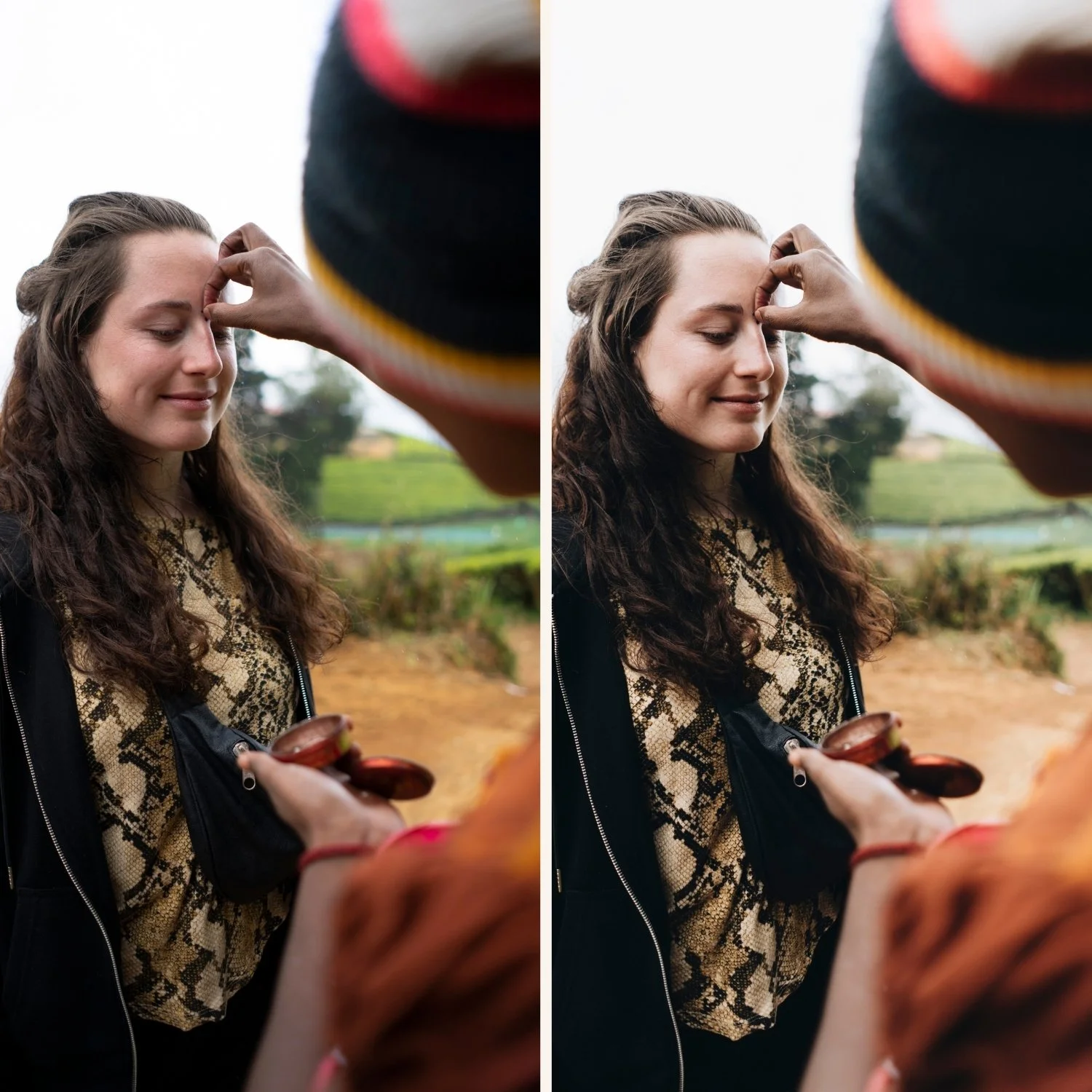
What Fujifilm film simulations actually do
Film simulations are applied at the JPEG processing level inside the camera. When you shoot JPEG on a Fuji, the simulation is baked into the file before it ever reaches Lightroom. When you shoot RAW, the simulation is visible in the camera LCD and in the RAW preview — but Lightroom ignores it entirely when you open the RAW file.
This is a critical distinction that many Fuji photographers miss.
JPEG shooting: The film simulation is permanently applied. Lightroom sees the processed JPEG with the simulation already embedded. You can adjust exposure, white balance, and add additional effects, but the simulation's color character is already there and cannot be removed.
RAW shooting: Lightroom opens the RAW file with Adobe's generic color rendering — ignoring the simulation entirely. The photo looks completely different from what you saw on the camera LCD. The simulation is essentially invisible to Lightroom unless you use camera-specific profiles.
Restoring film simulations in Lightroom RAW
When you open a Fujifilm RAW file in Lightroom, go to the Camera Calibration panel at the very bottom of the Develop module. Change the Profile from Adobe Color to Camera Classic Chrome, Camera Provia, Camera Velvia, or whichever simulation you used when shooting.
This restores Fujifilm's color science as the starting point for your Lightroom edit. Every adjustment you make on top of this foundation — exposure, highlights, color grading, presets — now works within Fujifilm's color philosophy rather than Adobe's generic rendering.
This one step is the most important thing any Fujifilm RAW photographer can do in Lightroom. Without it, you are discarding the color science that makes Fujifilm cameras distinctive.
What each Fujifilm film simulation looks like
Provia/Standard: Fuji's neutral baseline. Natural color, moderate saturation, balanced contrast. The most versatile simulation — good starting point for any subject. Works well with clean analog Lightroom presets applied on top.
Velvia: Vivid, high-saturation, high-contrast. Strong greens and deep blues. Landscape and nature photography. The most obvious and distinctive Fuji simulation. Reduce preset strength to 60-70% when adding Lightroom presets on top.
Classic Chrome: The most popular Fuji simulation among street and travel photographers. Desaturated, slightly cool, with a specific color shift that references old magazine and slide photography. The characteristic "expensive" quality of many respected Fuji photographers' work. Works beautifully with A6 or muted luxury Lightroom presets.
Pro Neg Std: For portrait and skin work. Softer than Provia, natural skin rendering, lower contrast. Pairs well with G1 or E-Series portrait presets.
Pro Neg Hi: Portrait simulation with slightly more contrast than Std. For photographers who want Portra-like skin quality with more visual punch.
Eterna Cinema: Flat, cinematic, low saturation. The most neutral simulation — almost no color treatment applied. Designed for video color grading but gives RAW stills a flat, editable starting point. Works with any moody or cinematic Lightroom preset.
Acros: Fuji's dedicated B&W simulation — the best in-camera black and white of any manufacturer. Fine grain with excellent tonal structure. If shooting B&W on Fuji, Acros in-camera is better than any in-Lightroom conversion. Apply X-Series Lightroom presets on top for additional grain character.
Classic Neg: Introduced on the X-Pro3. Heavier color shifts than Classic Chrome — more faded, more obviously film-like. Becoming increasingly popular for street and documentary work.
What Lightroom presets add that film simulations cannot
Even with film simulations restored in Lightroom, presets add things the simulation system cannot do.
Grain character. Fujifilm's simulation grain is fixed — the amount and size is determined by the simulation and the ISO. Lightroom presets add grain that is independent of ISO, with full control over amount, size, and roughness. For photographers who want specific grain character across their gallery regardless of ISO, Lightroom grain control is essential.
Color grading. Film simulations apply an overall color treatment. Lightroom's Color Grading panel adds separate color toning to shadows, midtones, and highlights — creating the warm-shadow, neutral-highlight split of classic film photography that no in-camera simulation can replicate.
Consistency across varied light. Fuji simulations apply identically regardless of lighting conditions. A Lightroom preset system with different calibrations for golden hour, overcast, and indoor light produces more consistent gallery quality than one simulation across all conditions.
Highlight roll-off control. Fuji simulations handle highlights well but Lightroom's manual Highlights and Whites controls plus the Tone Curve give more precise control over the specific soft roll-off quality of film.
White balance interaction. Film simulations interact with white balance in ways that can create unexpected results in challenging light. Lightroom lets you correct white balance precisely before the simulation's color character is applied on top.
The optimal Fuji workflow
For JPEG shooters:
Choose your simulation in camera (Classic Chrome or Provia for most scenarios)
Import to Lightroom
Fix exposure and white balance
Apply Lightroom preset at 50-60% strength — the simulation does most of the color work, the preset adds grain character and fine-tuning
Add Color Grading (warm shadows hue 35, saturation 10) if not already in the preset
For RAW shooters:
Shoot RAW + JPEG for reference (Fuji cameras support this)
Import RAW to Lightroom
In Camera Calibration, apply the same simulation you used for the JPEG reference
Fix exposure and white balance
Apply Lightroom preset at full strength — you now have the full control of RAW with the Fuji simulation as the starting point
Compare with the JPEG reference as a quality check
Best Lightroom presets for each Fuji simulation
Classic Chrome + preset: A7 Soft Matte or LV1 Muted Clean. Classic Chrome's desaturated, cool quality pairs with muted presets for the specific editorial quality that made this simulation famous.
Provia + preset: A6 Clean Portrait or V1 Classic Film. Provia's neutral quality benefits from the warm film character that a clean analog preset adds.
Velvia + preset: Any preset at 60-70% strength. Velvia is already vivid — the preset adds grain and tonal character without amplifying the already-high saturation.
Pro Neg Std/Hi + preset: G1 Clean Glow or E6 Soft Heritage. Portrait simulations + portrait presets for the warmest, most flattering skin results.
Eterna + preset: M4 Moody Classic or V4 Moody Classic. Eterna's flat, neutral quality benefits from a moody preset that adds the color depth and atmosphere Eterna deliberately removes.
Acros + preset: X1 Dramatic Base or B5 Warm Silver. Acros already has excellent tonal structure — a B&W preset adds grain character and refines the tonal contrast.
Which gives better film quality: simulations or presets?
Neither. The best film quality from a Fujifilm camera comes from using both together.
The simulation provides the camera-level color science — the specific way Fujifilm's sensor and processing interprets color, tone, and grain. No Lightroom preset can fully replicate this because it is applied at a level below what Lightroom accesses.
The Lightroom preset provides the editing-level film character — the grain control, color grading, tonal adjustments, and consistency tools that the in-camera simulation cannot offer.
Used together: Fujifilm simulation as the starting point, Lightroom preset as the refinement. The result is better than either alone.
FAQ
Do Lightroom presets work on Fujifilm X-Trans sensors?
Yes. Fujifilm's X-Trans sensor uses a different color filter arrangement than standard Bayer sensors. Adobe Lightroom supports X-Trans fully — camera profiles and presets work correctly. Some older third-party software had demosaicing issues with X-Trans but Lightroom Classic has handled it correctly since 2013.
Should I shoot JPEG or RAW on Fujifilm for the best film quality?
RAW + JPEG simultaneously is the professional recommendation. Edit the RAW in Lightroom with the camera profile matching the simulation for maximum quality. Keep the JPEG as a reference for color decisions. This gives you both RAW latitude and the simulation's specific color character.
Can I use the same preset on photos with different film simulations?
Yes — but the result will look different because the starting color is different. A warm preset on a Classic Chrome base looks different from the same preset on a Velvia base. Consider this intentional variation or create different preset+simulation combinations for specific scenarios.
Which Fuji camera has the best film simulations?
The most complete simulation set is available on the X-Pro3, X-T4, X-T5, X100V, and GFX series — all include Classic Neg and the latest simulation refinements. Older bodies (X-T2, X-T3) have Classic Chrome and all the main simulations but not Classic Neg.