How to Build a Preset System for Your Photography Business
How to Build a Preset System for Your Photography Business
Editing consistency is one of the most visible markers of professional photography. A client browsing a portfolio can see immediately whether the photographer has a coherent visual identity or whether each session was edited differently. Building a preset system is how you achieve consistency at scale — the same quality across 20 weddings, 50 portrait sessions, or a year of travel work.
This guide covers how to build a preset system that works for client photography, how to organise it in Lightroom, and how to maintain consistency without losing the per-photo adjustments that separate professional editing from automated batch processing.
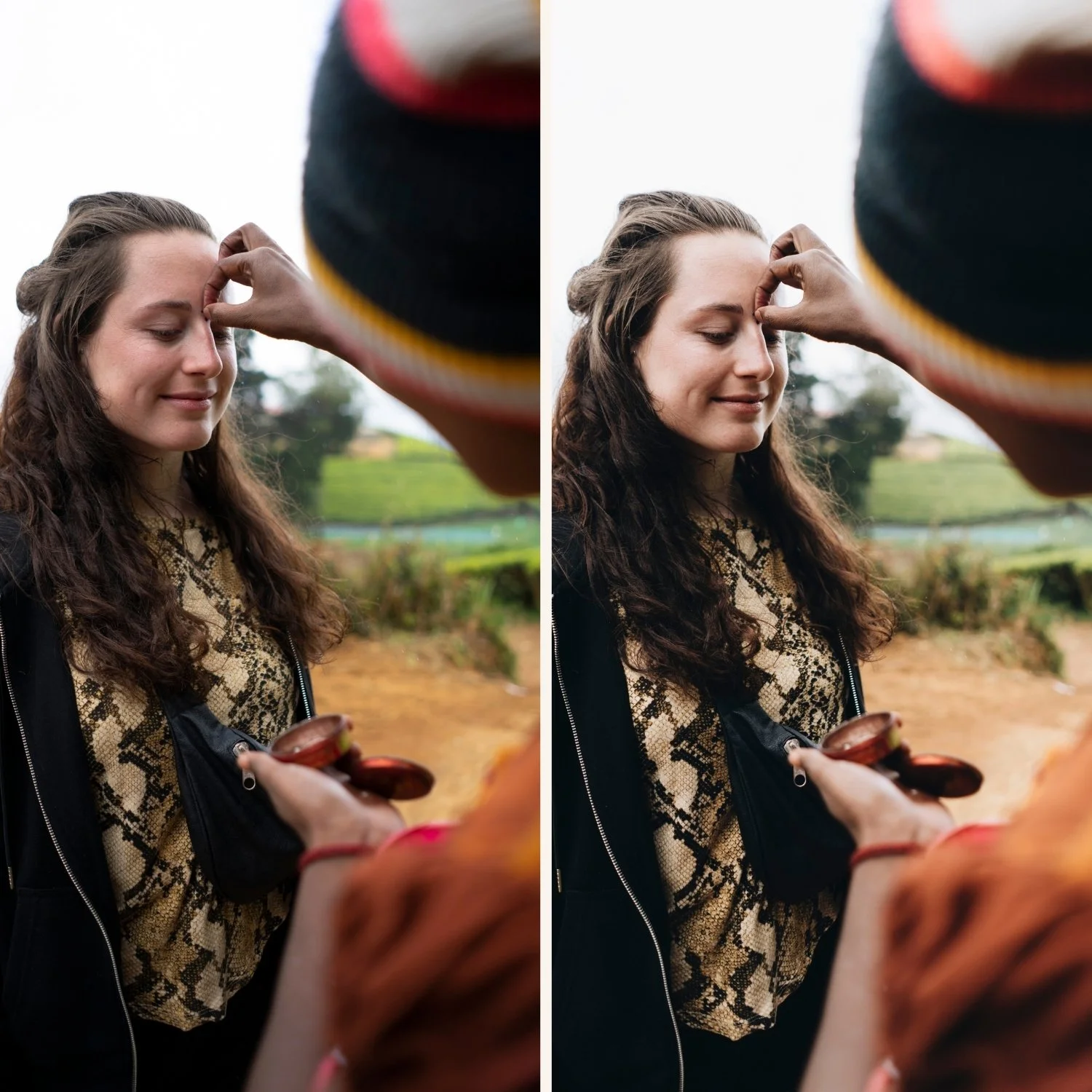
What a preset system is
A preset system is not a single preset applied to every photo. It is a structured set of presets covering the lighting scenarios, moods, and subjects in your work, organised so that any photo can be matched to the right starting point in seconds.
A professional preset system typically has three levels:
Level 1 — Base presets. Two to four presets that cover your core visual identity. These are the presets that define your style. Every photo in your portfolio should be traceable to one of these.
Level 2 — Scenario presets. Variations of the base presets calibrated for specific lighting scenarios. Indoor, outdoor, golden hour, overcast. These save the per-scenario white balance and tonal preparation that would otherwise be repeated manually on every photo.
Level 3 — Correction presets. Single-adjustment presets that fix specific problems: Skin Warmth +8, Highlights -15, Grain Reduce. Applied on top of the base or scenario preset to fine-tune individual photos quickly.
The three levels work together: apply the scenario preset (which has the base style plus the lighting calibration), then apply a correction preset if needed, then make the final per-photo Exposure and White Balance adjustment manually.
Step 1 — Define your visual identity
Before building the system, define the look you are building toward. Three questions:
What colour temperature is your core look? Warm (5,400-5,800K), neutral (5,000-5,400K), or cool (5,800-6,400K). This determines your Shadow Color Grading hue, your Vibrance level, and which presets serve as your base.
How much tonal depth do you want? Open and airy (Blacks +25-35, Shadow lift high) or atmospheric with more depth (Blacks +15-20, more Shadow Color Grading saturation).
How present is grain in your work? Fine and subtle (Amount 14-18) or visible and characterful (Amount 22-28).
The answers to these three questions define your base preset. Everything in the system is built around it.
Step 2 — Build the base preset
Start with the free A6 preset as your foundation if your work is portrait and lifestyle focused. Start with M4 if your work is more atmospheric and documentary.
Adjust until the result matches your defined visual identity. Save as "My Style — Base."
This is the most important step. The entire system flows from this preset.
Step 3 — Build scenario presets
For each major lighting scenario in your work, take the base preset and add the scenario-specific adjustments. Save as a new preset.
Outdoor daylight: White balance: 5,200-5,400K. Highlights: -40 to -50. Orange Saturation: 0 to +3. Save as: "My Style — Outdoor Day"
Overcast outdoor: White balance: 5,800-6,200K, Tint +5. Exposure: +0.2. Shadow Color Grading Saturation +4. Save as: "My Style — Overcast"
Golden hour: White balance: 5,400-5,600K, Tint +6. Highlights: -50. Orange Saturation: 0 to +2. Save as: "My Style — Golden Hour"
Indoor warm ambient: White balance: 3,800-4,500K. Shadow Color Grading Saturation +4. Preset strength 80%. Save as: "My Style — Indoor Warm"
Indoor flash: White balance: 5,500-6,000K. Highlights: -35. Clarity: -10. Save as: "My Style — Flash"
For wedding photographers, also add: Getting Ready, Ceremony, Reception as scenario presets calibrated to the typical lighting of each.
Step 4 — Build correction presets
These are single-adjustment presets, not style presets. They solve specific problems without changing the overall look.
Create these as presets with only the relevant adjustment checked:
+Skin Warmth: Orange Luminance +8, Orange Hue +3. For photos where skin is slightly cool.
-Highlights: Highlights -12, Whites -8. For photos where highlights need additional protection after the scenario preset.
+Shadow Depth: Blacks -6, Shadow Color Grading Saturation +4. For photos that need slightly more depth.
-Grain: Grain Amount -8. For close-up portrait shots where grain reads too strongly.
+Exposure: Exposure +0.25. For photos that came out slightly dark.
Step 5 — Organise in Lightroom
In Lightroom Classic, presets organise into folders in the Develop module preset panel.
Create three folders:
[Your Name] Base — Level 1 presets
[Your Name] Scenarios — Level 2 presets
[Your Name] Corrections — Level 3 presets
In Lightroom Mobile, presets organise into groups. Same structure.
The naming convention matters: start each preset name with the folder category so they sort correctly. "Base — Warm Outdoor," "Scenario — Golden Hour," "Correction — Skin Warmth."
The editing workflow with the system
Step 1: Select all photos from a scenario (all outdoor afternoon portraits from the session).
Step 2: Apply the matching scenario preset to all selected photos at once.
Step 3: Scan through the results. Apply correction presets to individual photos that need adjustment.
Step 4: Adjust Exposure and White Balance per photo manually. These two adjustments are always per-photo — they cannot be batch applied because every photo has different exposure and every photo's white balance reacts differently to the preset.
Step 5: Final review. Check any photo that looks different from the others — it usually has a white balance outlier or an exposure issue that the preset amplified.
This workflow produces consistent, professional results across a full session in significantly less time than editing photo by photo from scratch.
Maintaining the system over time
Presets drift. As your style evolves, the base preset becomes slightly outdated. Audit your system every six months:
Look at a recent client gallery and a gallery from six months ago. If they look meaningfully different, update the base preset to match your current direction and rebuild the scenario presets from the updated base.
Do not layer new adjustments on top of old presets indefinitely. Rebuild from the base when the direction changes.
FAQ
How many presets do I actually need?
One strong base preset plus four to five scenario presets covers the majority of professional photography scenarios. A system of more than fifteen presets is usually a sign that the base preset is not strong enough and scenarios are being patched rather than built from a clear foundation.
Should I use different base presets for different clients?
Only if your clients genuinely have different aesthetic directions. A consistent personal style applied across all clients is more professional than a different look per client. If a client wants a significantly different aesthetic from your standard work, that is a conversation about fit, not a reason to build a parallel preset system.
Can I build a preset system in Lightroom Mobile?
Yes, fully. The same preset group structure works in Mobile. For photographers who edit primarily on phone, build the system in Lightroom Mobile first and sync to desktop if needed.