The Psychology of Film Color — Why Warm Tones Feel Nostalgic
The Psychology of Film Color — Why Warm Tones Feel Nostalgic
There is a reason film preset photography feels different from technically perfect digital photography, and it is not purely aesthetic. The specific characteristics of the film look — warm shadows, lifted blacks, soft highlights, organic grain — correspond directly to how human memory encodes and recalls visual experience. Film photography looks like how we remember things, not how we see them in the present tense.
Understanding why this is the case makes you a more intentional editor. It also explains why certain editing choices that deviate from technical accuracy produce photographs that feel more emotionally true.
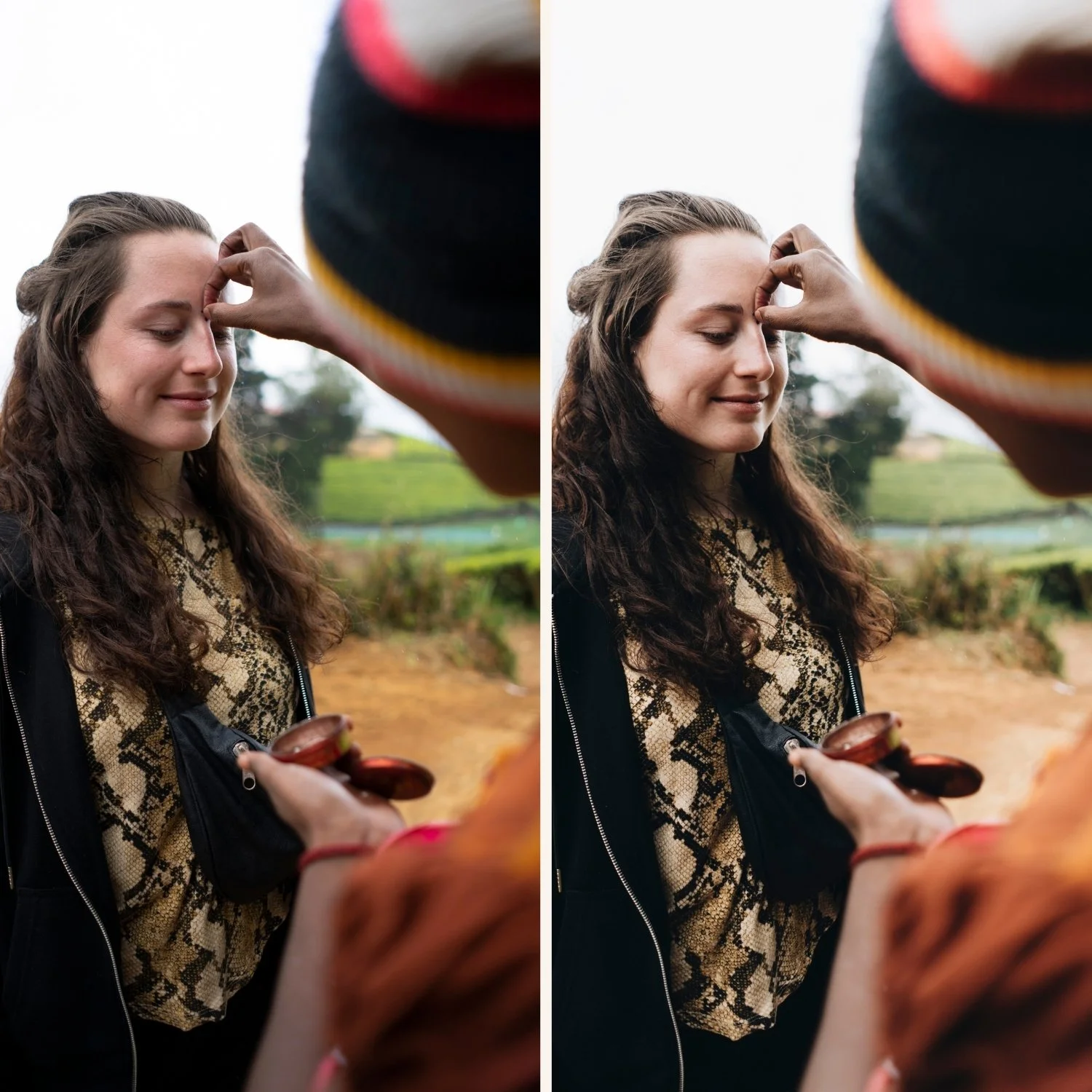
How memory changes the way we see colour
Memory is not a recording. When we recall a visual experience, the brain reconstructs it rather than replaying it. In this reconstruction, certain qualities are consistently altered:
Brightness and warmth are increased. Research on memory encoding consistently shows that positive autobiographical memories are recalled as brighter and warmer than the original experience. The specific warmth of remembered images corresponds closely to the 5,200-5,600K colour temperature range — the same range that film photography naturally occupied.
Contrast is reduced. Harsh contrast — hard shadows, blown highlights — is associated with the present moment and immediate visual processing. Memory softens contrast, compresses the tonal range, and lifts shadows toward the midtone range. The shadow floor in remembered images is never pure black.
Grain is associated with authenticity. Grain in visual memory functions as a marker of reality. Perfectly smooth, grain-free images look processed to the human visual system — they register as constructed rather than experienced. Organic grain, even at low levels, signals that the image came from the real world.
Saturation is slightly reduced. Vivid, high-saturation imagery is associated with commercial photography, advertising, and constructed visual content. Memory images have slightly muted colour that reads as genuine rather than produced.
These four characteristics are exactly the film look in Lightroom: warm colour, lifted shadows, organic grain, reduced vibrance. The film look corresponds to how memory works, which is why it feels more emotionally resonant than technically perfect digital photography.
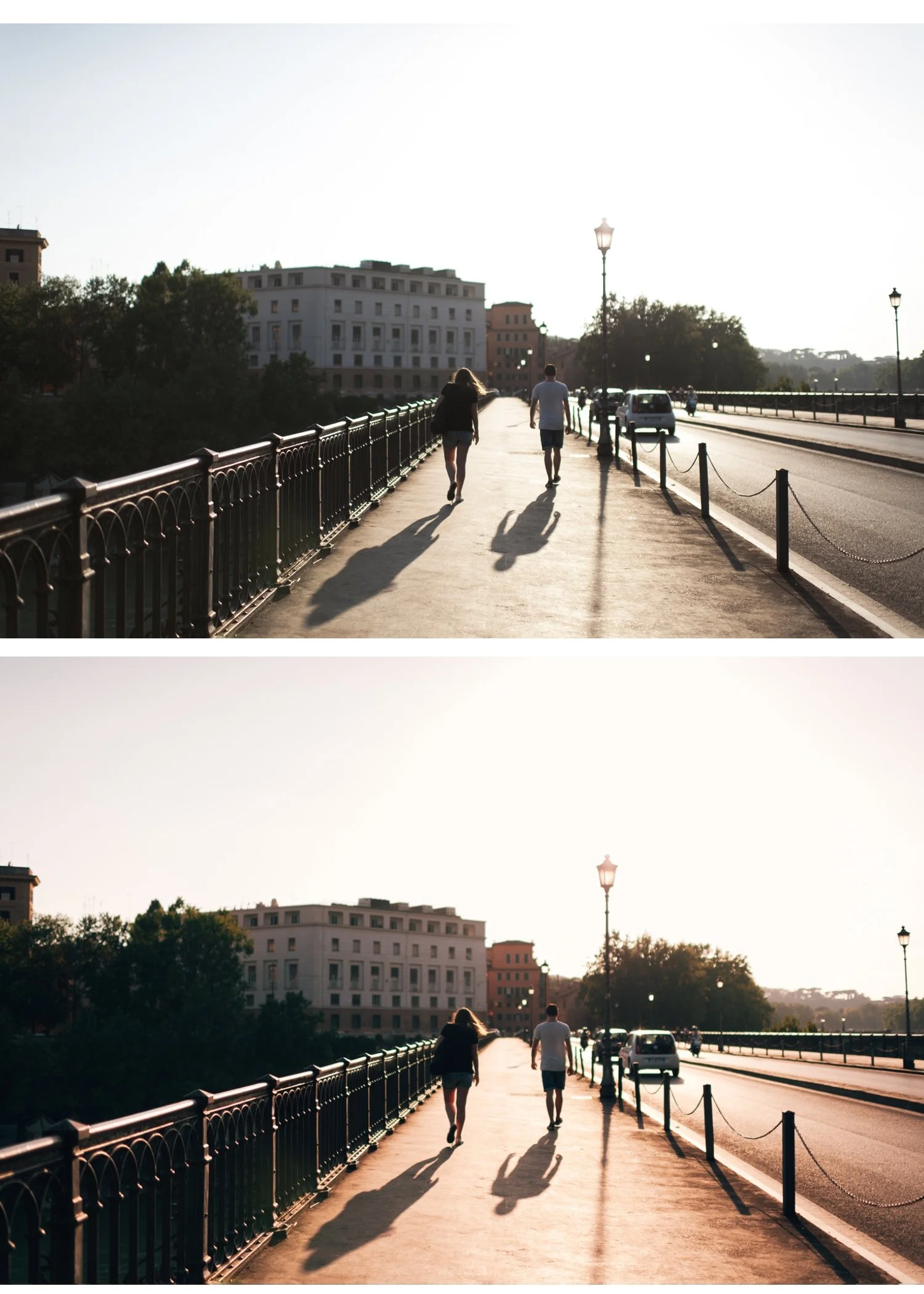
Why lifted blacks feel like memory
The black point — the darkest point of the tonal range — is one of the most psychologically significant editing choices in photography.
Pure black (Blacks at 0 or negative) tells the visual system that this is a present-tense document. Security camera footage, news photography, and scientific imaging all tend toward pure black because they are records of what happened, not expressions of how it felt.
Lifted blacks (Blacks +18 to +28) tell the visual system something different: this image has been through time. The lifted shadow floor corresponds to how photographic prints aged — the chemical base of the print shifted toward a warm grey-black as the silver compounds oxidised over years. This aging process is what our visual system associates with photographs that have existed for a while, which is what photographs in memory feel like.
When you lift the Blacks in Lightroom you are not just adding a technical quality — you are adding a temporal one. The photo starts to feel like it has already become a memory.
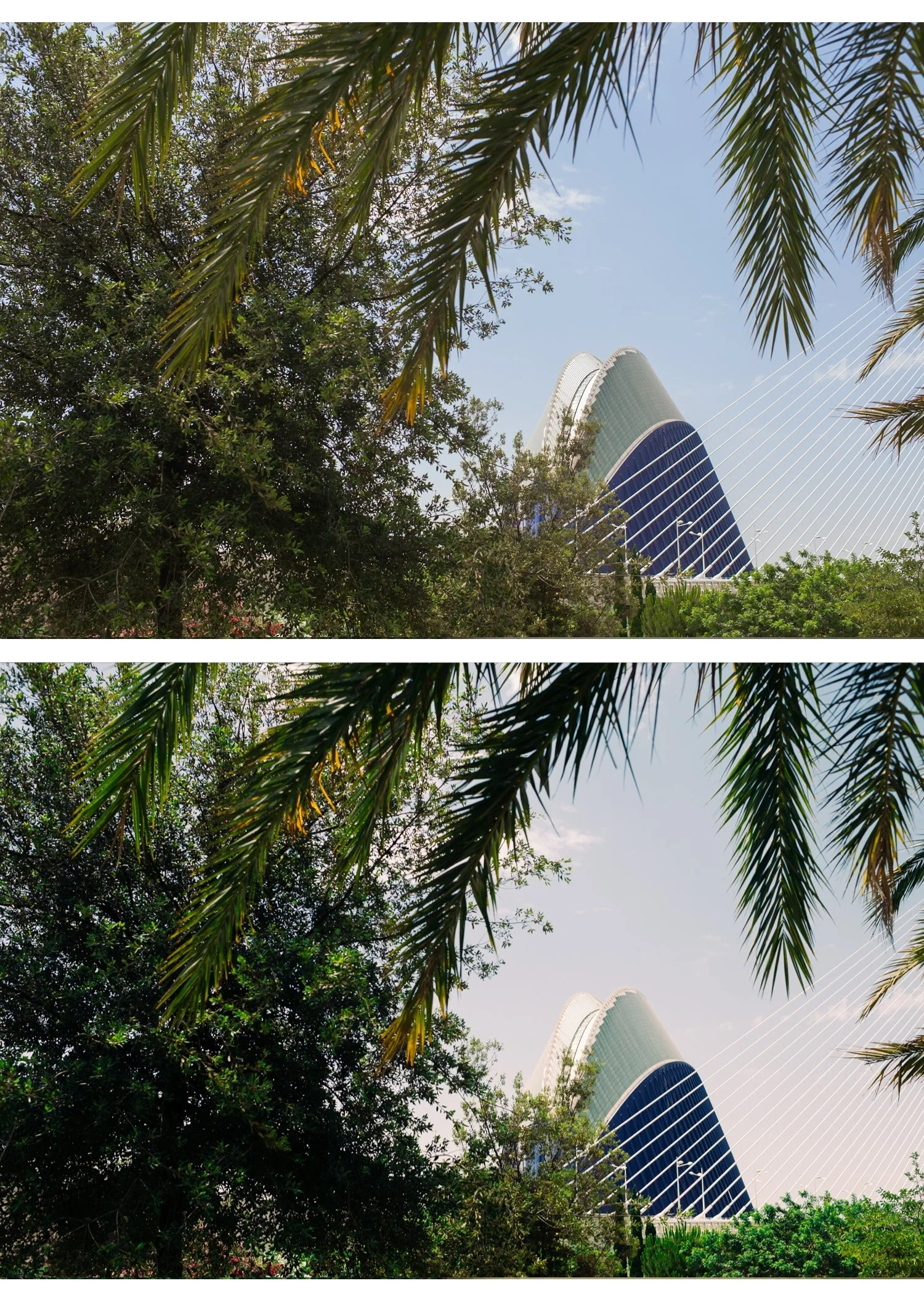
The warmth of remembered experience
The specific warmth of film photography — the Kodak Portra 400 reference, the amber shadow quality, the golden-shifted skin tones — corresponds to the warmth of afternoon light.
Afternoon light (3,000-5,500K depending on time and season) is the light of human activity. Mornings are cool and blue. Midday is harsh and overhead. Evenings return toward warmth. The periods of highest positive human activity — meals, socialising, outdoor time — tend to happen in afternoon to evening warm light.
The film look's warmth is calibrated to this light range. Shadow Color Grading at Hue 35-42 corresponds to the amber quality of late afternoon light in shadow. Orange Luminance lift corresponds to how skin appears in warm afternoon sun. The overall warmth of film presets is not arbitrary — it references the light quality of moments worth photographing.
This is also why cool, blue-shifted editing tends to feel less emotionally resonant for most personal and lifestyle photography. Cool light is associated with morning, with clinical environments, with impersonal spaces. Warm light is associated with presence, intimacy, and the quality of time worth remembering.
Grain as an authenticity signal
The human visual system developed in a world where all images were either physically present (objects, people, landscapes) or mediated through imperfect recording technology (film). Perfect, grain-free digital imagery is evolutionarily new.
The visual system processes grain as a marker of physical recording. Grain says: this image came through a physical medium, it was in the world. This is the opposite of the smooth, grain-free quality of CGI, advertising retouching, and AI-generated imagery — all of which the visual system increasingly associates with constructed rather than experienced content.
This is partly why film preset photography continues to grow in popularity alongside increasingly powerful AI image generation. As more imagery becomes synthetic, the organic qualities of the film look — grain, soft contrast, warm colour, lifted blacks — become stronger signals of authenticity.
Applying this to your editing decisions
Understanding the psychology behind film colour gives each editing decision a purpose beyond visual preference:
Blacks: +18 to +28 — temporal quality, the photo feels like it has already become a memory.
Shadow Color Grading: Hue 35-42, Saturation 10-16 — afternoon warmth, the light quality associated with presence and positive experience.
Grain: Amount 18-26, Roughness above 42 — physical authenticity, the image came from the real world.
Vibrance: -8 to -15 — genuine rather than produced colour, the muted quality of experienced rather than constructed imagery.
Orange Luminance: +14 to +18 — skin in warm afternoon light, the most universal positive visual memory.
None of these is arbitrary. Each corresponds to a specific quality of how positive human experience is stored and recalled visually.
Why technically perfect photography often feels cold
The irony of digital photography's technical advances is that higher technical quality has often produced lower emotional resonance. Perfectly sharp, perfectly exposed, perfectly colour-accurate images look like the present moment — clinical, precise, and emotionally neutral.
The film look's deliberate departure from technical accuracy is what gives it emotional weight. Soft grain, lifted blacks, warm colour, and controlled highlights are technical imperfections that correspond to psychological truths about how we experience and remember visual content.
A technically perfect photograph documents. A film look photograph remembers.
FAQ
Is the film look more popular because of nostalgia for actual film photography?
Partly, but not primarily. Most photographers using film presets in 2026 are too young to have shot on film professionally. The appeal is the psychological quality described above — the look corresponds to memory and authenticity in ways that resonate regardless of personal experience with film photography.
Does this mean moody dark editing is psychologically less effective?
Dark moody editing with crushed blacks corresponds to different psychological states — drama, tension, atmospheric unease. It is not less effective but it is effective for different emotional registers. For personal, warm, and intimate photography, lifted blacks and warm colour are psychologically more resonant.
Why does grain look better in black and white than colour?
In black and white, grain is the primary texture element and has nothing to compete with. In colour, grain interacts with colour saturation. At high Vibrance, grain looks like digital noise. At lower Vibrance (the film look standard), grain reads as organic texture for the same reason it does in black and white.