How to Create a Signature Editing Style in 30 Days
How to Create a Signature Editing Style in 30 Days
Most photographers who want a signature editing style approach it the wrong way: they try out different presets, copy references from photographers they admire, and hope that something eventually sticks. The result is a portfolio that looks like a collection of influences rather than a visual identity.
A signature editing style does not come from finding the right preset. It comes from understanding what visual qualities resonate with you, making deliberate choices about colour and tone, and applying them consistently long enough to internalise them. This guide gives you a 30-day framework for doing that.
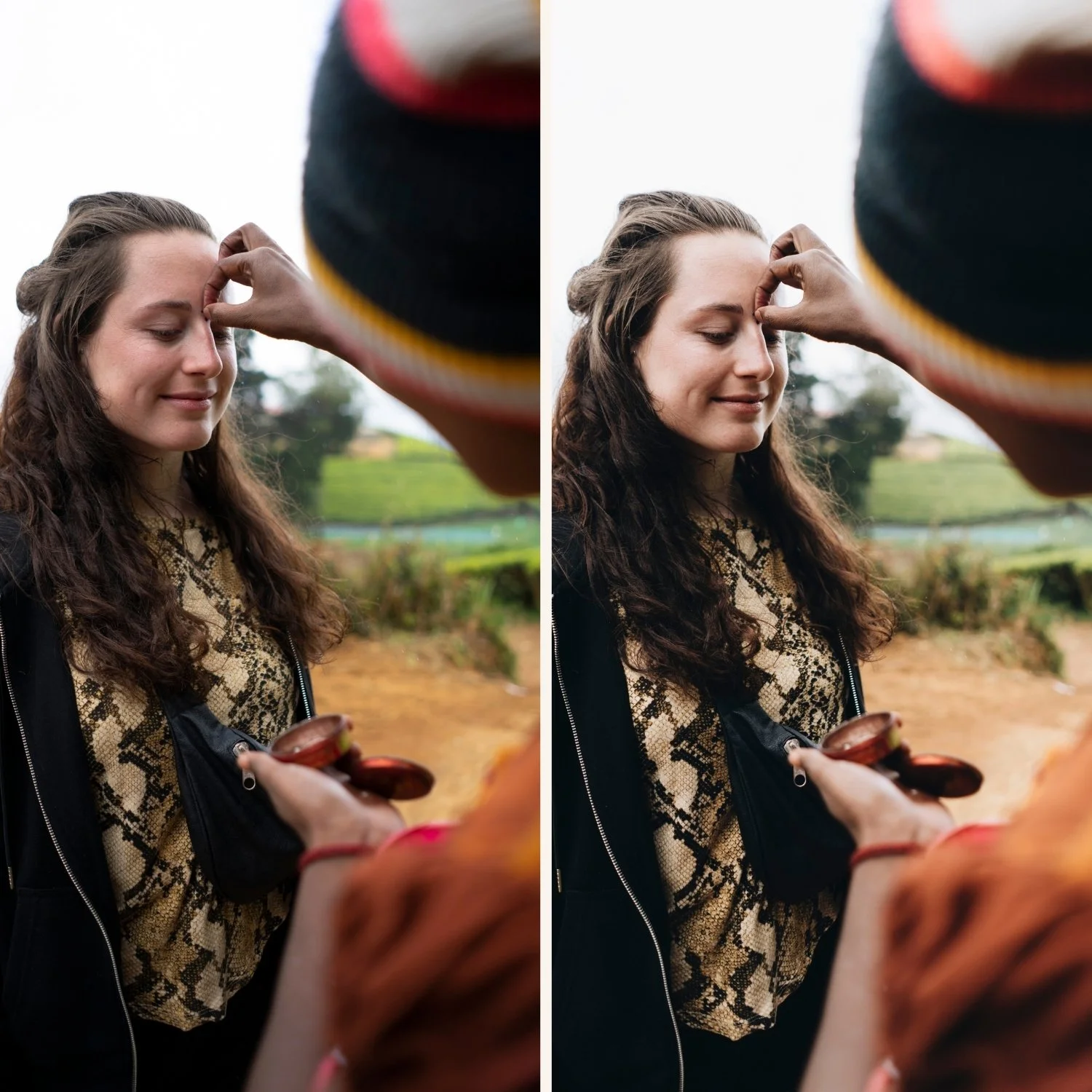
Why most photographers do not have a consistent style
Before the framework, it is worth understanding why style inconsistency is so common.
Preset switching. Applying a different preset to every photo or every session produces variety rather than identity. Consistency requires commitment to a limited visual language.
Matching the subject instead of expressing the photographer. Many photographers edit based on what seems appropriate for the subject — warm for golden hour, cool for winter, dramatic for moody scenes. The result is technically appropriate but has no consistent authorial voice. The best photographers have a visual identity that persists across subjects and seasons.
Optimising for immediate approval. Editing to what looks good in the moment rather than what is consistent with a developing direction. A photo edited to look impressive as a standalone image often looks out of place in a cohesive gallery.
Developing a signature style requires accepting that consistency is more important than individual photo optimisation.
Week 1 — Define your references (Days 1-7)
The goal of week one is not to start editing differently. It is to articulate what you are working toward.
Day 1-2: Collect 20 photos that represent your ideal aesthetic. These can be your own best work, photographs by photographers you admire, or film stills. The criterion is that each one represents a quality you want more of in your own work. Save them in a folder.
Day 3-4: Identify the common visual qualities. Look at your 20 references together. What colour temperature do most of them share? Warm, neutral, or cool? How are the shadows rendered — open and lifted, or deep and atmospheric? How much grain is present? Is skin warm and golden or cooler and more neutral?
Write down three to five qualities you see consistently. These are your style targets.
Day 5-7: Translate to Lightroom values. Map each quality to a specific Lightroom adjustment:
Warm shadows = Shadow Color Grading Hue 35-42, Saturation 12-16 Lifted, open shadows = Blacks +22-30, Shadows +15-20 Fine organic grain = Amount 16-22, Size 22-26, Roughness 44-50 Muted organic colour = Vibrance -10 to -15, Green Saturation -12 to -15
Write down the Lightroom values that correspond to your style targets. This is your style brief.
Week 2 — Build the base preset (Days 8-14)
Take the free A6 preset as your starting point if your style targets are warm and portrait-focused. Take M5 if they are more atmospheric and moody.
Day 8-10: Apply your style brief adjustments on top of the starting preset. Edit ten photos from your existing catalogue. Compare the results to your reference folder. Note what is close and what is still off.
Day 11-12: Refine. The most common adjustments needed at this stage:
If results look too orange: reduce Orange Saturation to 0 to +3, correct White Balance to 5,200-5,400K before applying.
If results look flat: increase Shadow Color Grading Saturation to 14-16, ensure Blacks are not lifted above +30.
If grain looks like noise: increase Roughness to 46-52, reduce Size to 22-24.
Day 13-14: Save the refined settings as your base preset. Name it "My Style — V1." This is not final — it is version one.
Week 3 — Apply consistently and observe (Days 15-21)
Week three is about volume. Apply your V1 preset to every photo you edit this week. Do not switch presets. Do not try a different approach because a specific photo seems like it would suit something else.
The goal of week three is twofold: to accumulate a body of work edited in one direction, and to identify the specific scenarios where your V1 preset does not perform well.
Keep a note of the failures. Photos where the V1 result looked wrong — not just different, but wrong. These are the gaps in your scenario coverage. Common gaps:
Indoor artificial light with warm ambient. Very dark atmospheric scenes. Bright overcast outdoor light.
These gaps become your scenario presets in week four.
Week 4 — Build scenario presets and refine (Days 22-30)
Day 22-25: For each gap identified in week three, create a scenario preset. Take V1 and add the adjustments needed for that specific lighting scenario. Save as "My Style — Indoor Warm," "My Style — Overcast," etc.
The scenario presets share the same visual identity as V1. They are not different styles — they are the same style calibrated for different light.
Day 26-28: Assemble a gallery of 30-50 photos edited during weeks two and three using your preset system. Look at them together.
Ask: does this look like one photographer? Does each photo feel like it belongs in the same body of work?
If yes: you have the beginning of a signature style.
If not: identify the photos that look different from the rest. What adjustment caused the divergence? Refine.
Day 29-30: Commit to V1 as your editing direction for the next 90 days. The style is not finished — it will continue to refine with use. But consistency over 90 days is what internalises the look, makes it instinctive, and begins to define your visual identity in the perception of viewers.
What signature style is not
A signature editing style is not a filter that looks the same on every photo. Photos in the same style can vary in brightness, warmth, and mood while sharing the same underlying visual philosophy.
The consistency is in the character: the same shadow quality, the same colour temperature range, the same grain character, the same level of contrast. Not identical output but recognisable authorship.
The photographers whose work is most immediately recognisable do not apply identical settings. They have internalised a visual language and apply it with judgment. That is the goal of the 30-day process above: not to automate your editing but to develop the visual language that makes your judgment consistent.
FAQ
What if my style references are very different from each other?
Look for the common qualities beneath the surface differences. Two references can look very different in subject matter, colour palette, and mood but share the same shadow character, the same level of muted colour, the same grain quality. The shared qualities are the style.
How long does it take to develop a truly signature look?
The 30-day framework builds the foundation. A recognisable, mature style typically takes 12-18 months of consistent application to fully internalise. The 30 days establishes the direction — time and volume build the mastery.
Should I change my style when trends change?
Trends inform direction but should not drive style. The photographers with the most durable visual identities evolve slowly and intentionally rather than following trend cycles. A style built on the timeless qualities of the film look — organic warmth, lifted shadows, fine grain — will remain relevant regardless of trend cycles.