How Professional Photographers Choose Their Editing Style
How Professional Photographers Choose Their Editing Style
Professional photographers with recognisable editing styles did not find their look by trying every preset until one felt right. They made deliberate decisions about what their work should communicate, identified the visual qualities that serve that communication, and applied them consistently enough that the style became second nature. The process is repeatable.
This guide covers how professional photographers actually make editing style decisions — and how to apply the same thinking to developing your own.
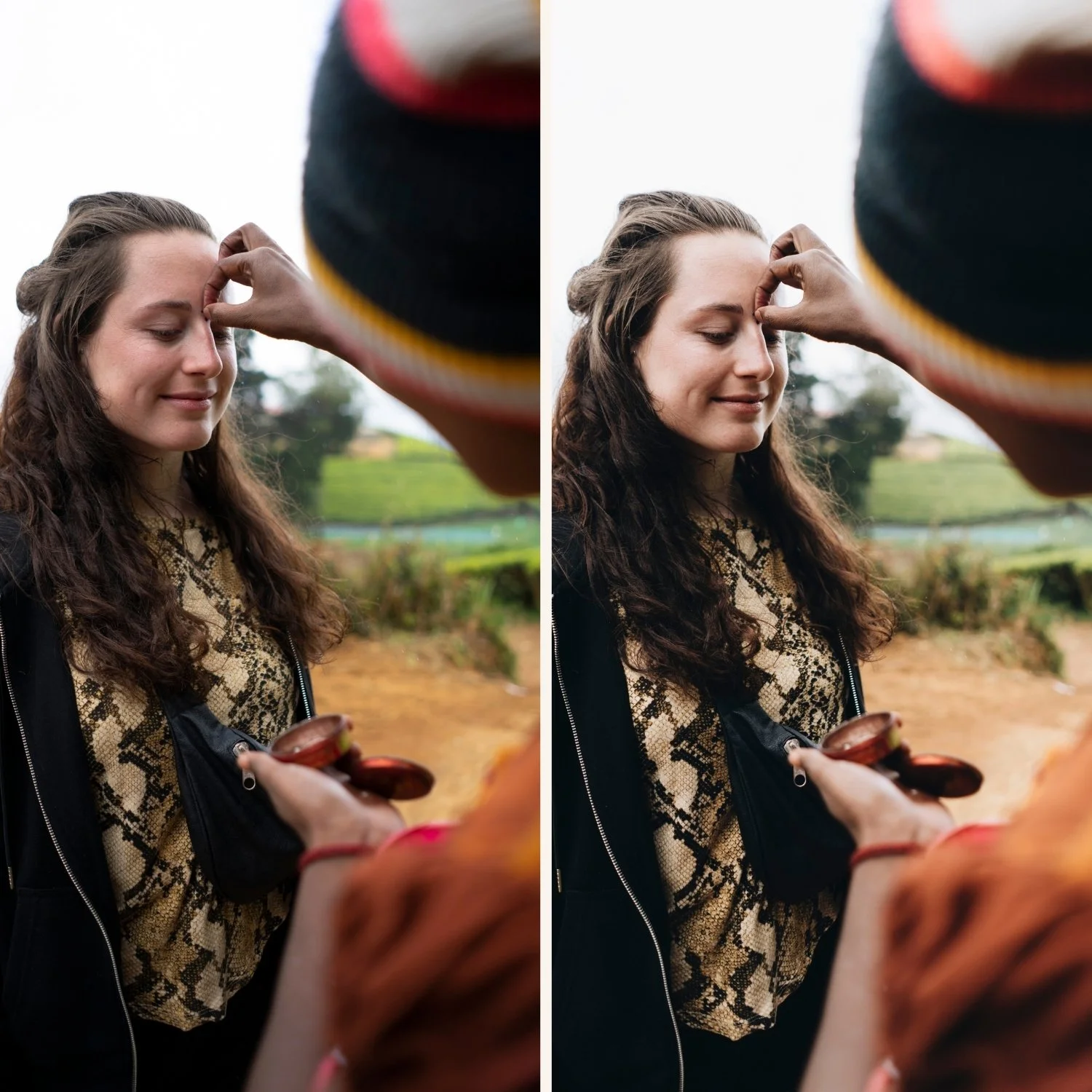
The decision starts with the subject, not the tool
The most common mistake in editing style development is starting with presets and working backwards toward a subject. Professional photographers start with their subject matter and work forward toward a visual language that serves it.
Portrait photographers working with families in natural light choose editing qualities that prioritise warmth, flattering skin, and timeless character — because these qualities serve the emotional purpose of family photography.
Documentary photographers choose editing qualities that prioritise authenticity, organic grain, and restrained colour — because these qualities communicate that the images are records of real experience rather than produced photographs.
Travel photographers choose editing qualities that convey a sense of place and atmosphere — distinctive enough to be immediately recognisable as a personal vision rather than a generic record.
The editing style serves the subject matter. Choosing a style that fights against the subject — heavy moody editing for warm family work, bright and airy editing for gritty documentary — produces cognitive dissonance that viewers sense even if they cannot articulate it.
The four decisions that define an editing style
Professional editing styles are built on four specific decisions:
Decision 1 — Colour temperature direction. Warm (5,200-5,800K reference), neutral (4,800-5,400K), or cool (5,600-6,500K). This is the most visible and consistent characteristic of any editing style. Photographers with a warm direction always look warm. Photographers with a neutral direction always look clean. This does not change per photo or per season — it is the constant.
Decision 2 — Shadow character. Open and lifted (Blacks +22-32, airy quality) or deep and atmospheric (Blacks +12-18, more shadow depth). This is the second most defining characteristic. Open shadows create an accessible, present-moment quality. Deep shadows create an atmospheric, cinematic quality.
Decision 3 — Colour saturation level. Organic and muted (Vibrance -10 to -15), clean and present (Vibrance -5 to -8), or slightly vivid (Vibrance 0 to +5). The saturation level defines whether the editing direction reads as film-quality, modern, or graphic.
Decision 4 — Grain presence. Subtle (Amount 12-16), present (Amount 18-24), or characterful (Amount 26-34). Grain is the most immediately recognisable film quality. The level chosen should feel inherent to the work rather than added.
How working photographers make these decisions
Step 1 — They look at what their best work has in common.
Not the technically best photos but the photos that feel most like them. The photos they would show as examples of their work at its most personal.
These photos have editing characteristics in common even if those characteristics were not consciously chosen. Identifying what is shared — the shadow character, the colour temperature range, the saturation level — reveals the editing direction that is already present in the work.
Step 2 — They make the implicit explicit.
The editing qualities identified in step one become conscious choices. Instead of applying similar settings intuitively on some photos and different settings on others, the style is formalised into a preset that can be applied consistently.
This step often involves simplification: the instinctive style turns out to be simpler than it appeared. Three or four adjustments account for 80% of the recognisable character.
Step 3 — They test the style against their weakest work.
The real test of an editing style is not whether it improves your best photos — it is whether it holds together on your average photos. A style that only works on ideal images is a style that produces inconsistency in practice.
Apply the formalised preset to twenty photos from a recent session — including the ones that did not turn out as hoped. Evaluate whether the style is consistent across the range or only appears on the strongest images.
Step 4 — They commit and do not revisit for 90 days.
The style is not evaluated immediately. The decision is committed to for 90 days of consistent application. After 90 days — approximately 60-80 posts — the style has accumulated enough visual evidence to evaluate properly.
Changing direction before this point is the most common reason photographers do not develop a recognisable style.
The role of presets in professional editing
Professional photographers use presets as a foundation, not as a finished result. The preset establishes the visual identity. Per-photo Exposure and White Balance adjustments adapt the identity to each image.
This is why the quality of the base preset matters. A preset that correctly implements the four decisions above — colour temperature, shadow character, saturation level, grain — provides a foundation that produces consistent results across varied subjects and lighting conditions.
The TES Analog Film Archive is built on this principle: each preset in the collection implements a specific combination of the four decisions above, calibrated to be used as a foundation rather than a final result.
Explore the Analog Film Archive — $27 →
For photographers building a comprehensive system across warm, moody, and cinematic directions, the Studio Archive contains the complete collection.
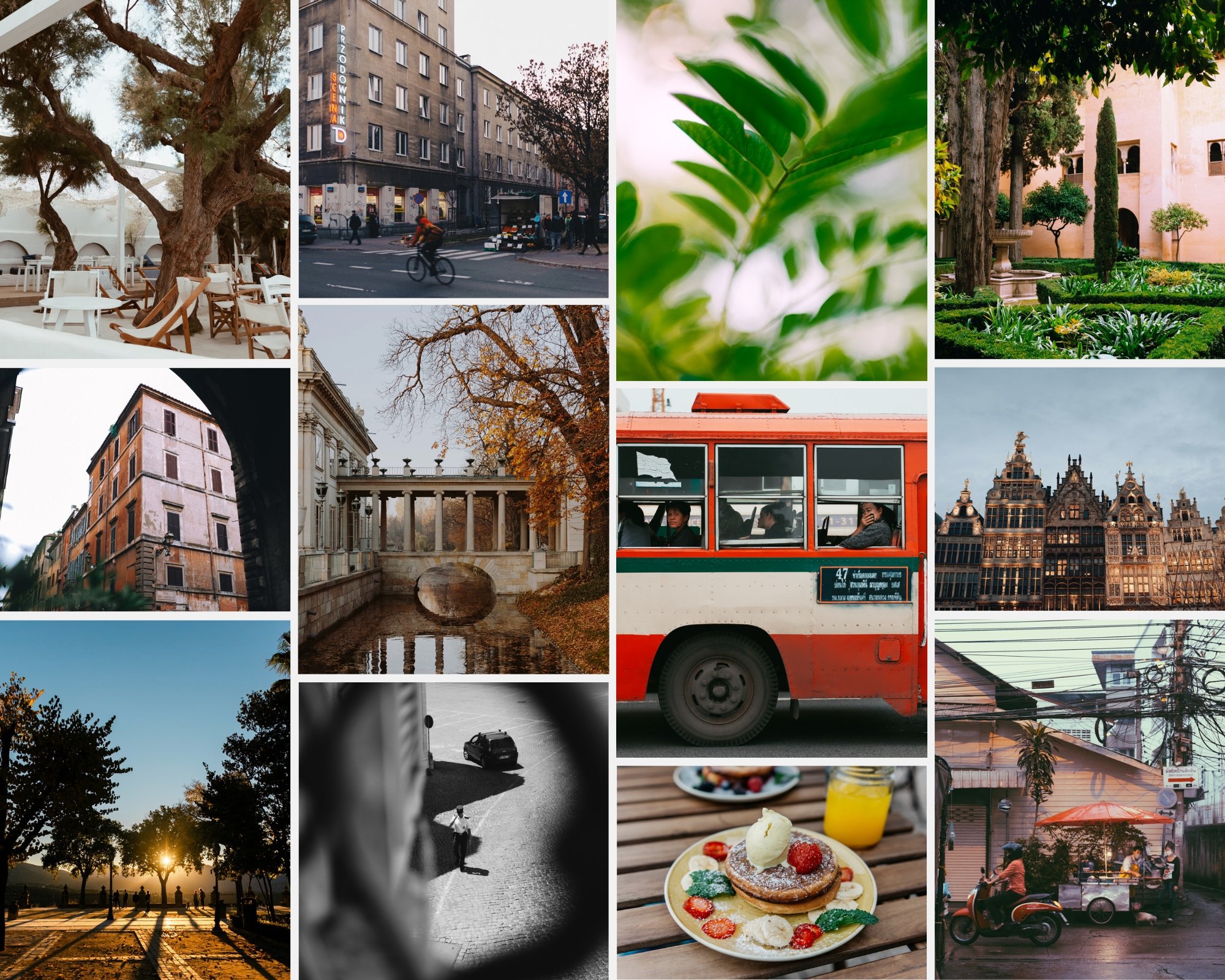
The relationship between style and genre
Editing style and photography genre are not the same thing but they are related. The most effective editing styles are calibrated to a specific genre or set of related genres — not applied universally across every type of photography.
A portrait photographer who also shoots landscape can use the same base style for both, but the specific adjustments that work for portraits (lower Clarity, more Orange Luminance, controlled highlights on skin) are different from the ones that work for landscapes (more Green Saturation reduction, stronger Blue Saturation control, different shadow depth). The style is consistent; the application is calibrated.
FAQ
Do professional photographers ever change their editing style?
Yes, but slowly and intentionally. A style change is a strategic decision — a deliberate shift in direction rather than an experiment. Most photographers with recognisable styles make one or two meaningful style changes in their careers, not seasonal adjustments.
Should I develop my style before or after buying presets?
Start with the free A6 preset and edit 30-50 photos in one direction. This gives you enough evidence to understand your instinctive preferences before investing in a full collection. Then the collection choice is informed by what you already know works for your work.
What if my style preferences conflict with my clients' expectations?
Style preferences and client expectations rarely conflict if the client hired you based on your existing portfolio. If a client asks for an editing direction significantly different from your portfolio, that is a sign of a brief mismatch rather than a reason to change your style.