How to Edit RAW Photos in Lightroom Mobile (2026)
How to Edit RAW Photos in Lightroom Mobile (2026)
RAW files give you significantly more editing control than JPEGs — more exposure latitude, better highlight recovery, and more accurate color correction. Lightroom Mobile supports RAW files from cameras and iPhone ProRAW files, giving you the same professional editing control on your phone that you have on desktop.
This guide covers exactly how to import, edit, and export RAW files in Lightroom Mobile.
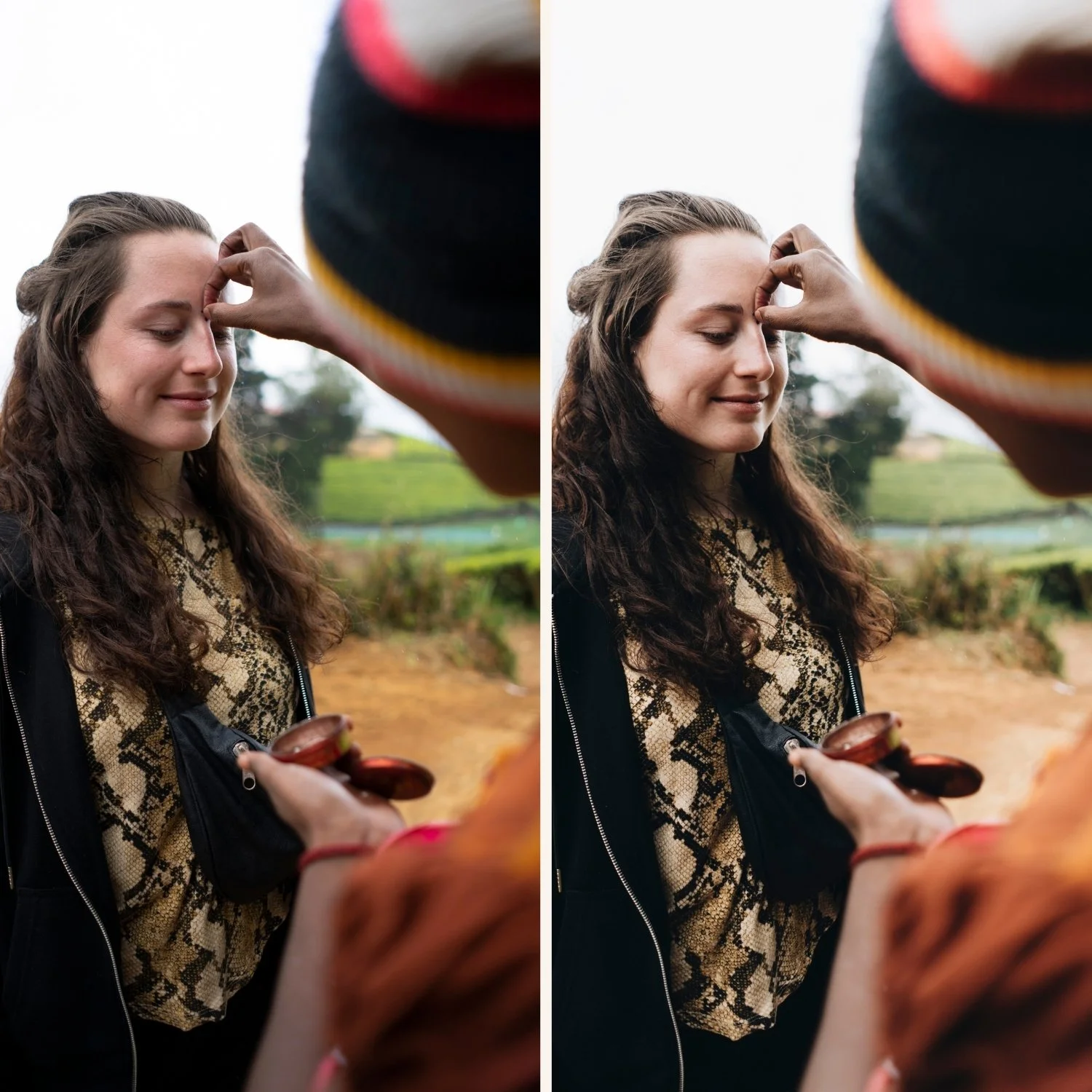
RAW vs JPEG — why it matters for mobile editing
A JPEG file has already been processed by your camera — the camera applied sharpening, noise reduction, color processing, and compression before saving the file. You are editing the result of that processing.
A RAW file contains the unprocessed sensor data. No in-camera processing has been applied. Lightroom Mobile has full access to the original sensor information — which means:
More exposure latitude. You can recover 2-3 stops of underexposed or overexposed detail from RAW that would be lost in a JPEG.
Better highlight recovery. Blown highlights in RAW often still contain recoverable detail. In JPEG, blown highlights are permanently lost.
More accurate color. RAW white balance correction is precise and does not introduce color quality loss. JPEG white balance correction has limits.
Better noise reduction. Lightroom's RAW noise reduction works on the original sensor data and produces significantly better results than noise reduction on a processed JPEG.
The tradeoff: RAW files are larger and require more editing. But for anything beyond casual social media photos, RAW is worth it.
How to import camera RAW files into Lightroom Mobile
Method 1 — From a memory card (with card reader)
Connect a card reader to your iPhone or Android. Lightroom Mobile can import directly from external storage.
Tap the + button in Lightroom Mobile's main screen
Tap "From Files" or "From Camera Roll"
Navigate to your memory card
Select your RAW files and tap "Add"
Method 2 — Via Adobe cloud (recommended for camera RAW)
Import RAW files into Lightroom Classic or CC on desktop. They automatically sync to Lightroom Mobile via the Adobe cloud, where you can edit them on your phone.
Method 3 — Transfer via AirDrop or Files app (iPhone)
Transfer RAW files to your Files app using AirDrop, Lightning/USB-C connection, or a cloud service. Then import from Files in Lightroom Mobile.
How to enable and edit iPhone ProRAW
iPhone 12 Pro and later support Apple ProRAW — a RAW format that combines Apple's computational photography with RAW editing latitude.
Enable ProRAW: Settings > Camera > Formats > Apple ProRAW. Toggle on.
Shoot ProRAW: In the Camera app, tap the RAW button at the top right to toggle ProRAW on for individual shots.
Import into Lightroom Mobile: ProRAW files save to your Camera Roll. In Lightroom Mobile, tap + and import from Camera Roll. Lightroom Mobile automatically recognizes and processes ProRAW files.
Editing ProRAW vs standard iPhone JPEG: ProRAW gives you significantly more exposure latitude — you can push and pull exposure by 2-3 stops without the quality loss that JPEG shows. White balance correction is more accurate. The difference is most visible in challenging lighting conditions.
Best workflow for RAW editing in Lightroom Mobile
Step 1 — Set white balance. RAW files from cameras ignore in-camera white balance — Lightroom applies its own default. Set white balance correctly before applying any preset. For indoor photos: cool Temperature to around 3000-3500K. For outdoor overcast: around 6000-6500K.
Step 2 — Apply your preset. Film presets work on RAW files with significantly better results than on JPEGs because RAW has more tonal latitude for the preset's adjustments to work within.
Step 3 — Adjust exposure. Correct any exposure issues. RAW gives you 2-3 stops of latitude in each direction before quality degrades.
Step 4 — Fine-tune color. Check skin tones and adjust HSL if needed.
Step 5 — Reduce sharpening. Camera RAW files usually come in with Lightroom's default sharpening at 40. For film preset editing, reduce to 20-25. The sharpening adds digital crispness that works against the film look.
Export settings for RAW-edited photos from Lightroom Mobile
After editing, export with these settings for best quality:
For Instagram: JPEG, 1080px on longest side, 72 DPI, 80% quality
For full quality delivery: JPEG, maximum resolution, 300 DPI, 100% quality
For printing: TIFF or maximum JPEG, 300 DPI at print size
Full guides:
Free preset for RAW editing
The free A6 preset is specifically calibrated for RAW files — it works on both camera RAW and iPhone ProRAW with natural results. Download and apply to your next RAW shoot.
FAQ
Does Lightroom Mobile support all RAW formats?
Lightroom Mobile supports most major camera RAW formats including Canon CR2/CR3, Nikon NEF, Sony ARW, Fujifilm RAF, and Apple ProRAW. Check Adobe's support page for your specific camera model.
Is RAW editing free in Lightroom Mobile?
Basic RAW import and editing is available in the free version of Lightroom Mobile. Some advanced features like Premium presets and certain export options require a subscription. All editing tools are free.
Why does my camera RAW look different in Lightroom Mobile than on desktop?
Lightroom Mobile and Lightroom Classic use slightly different rendering for some camera profiles. This is normal — adjust exposure and white balance as needed. The difference is usually minor.
Can I edit RAW files from a mirrorless camera on my phone?
Yes. Import via a card reader connected to your phone, or sync through Lightroom CC if you have a subscription. The editing capabilities are the same as on desktop.