How to Get the Film Look on iPhone — Lightroom Mobile Guide (2026)
How to Get the Film Look on iPhone — Lightroom Mobile Guide (2026)
Film photography has a quality that digital struggles to replicate — lifted shadows, soft highlight roll-off, organic grain, and a color palette that feels timeless rather than processed. The good news is that with Lightroom Mobile and the right settings, you can get very close to that look using only your iPhone.
This guide covers the exact settings, the step-by-step process, and the quickest way to get consistent film results on every photo.
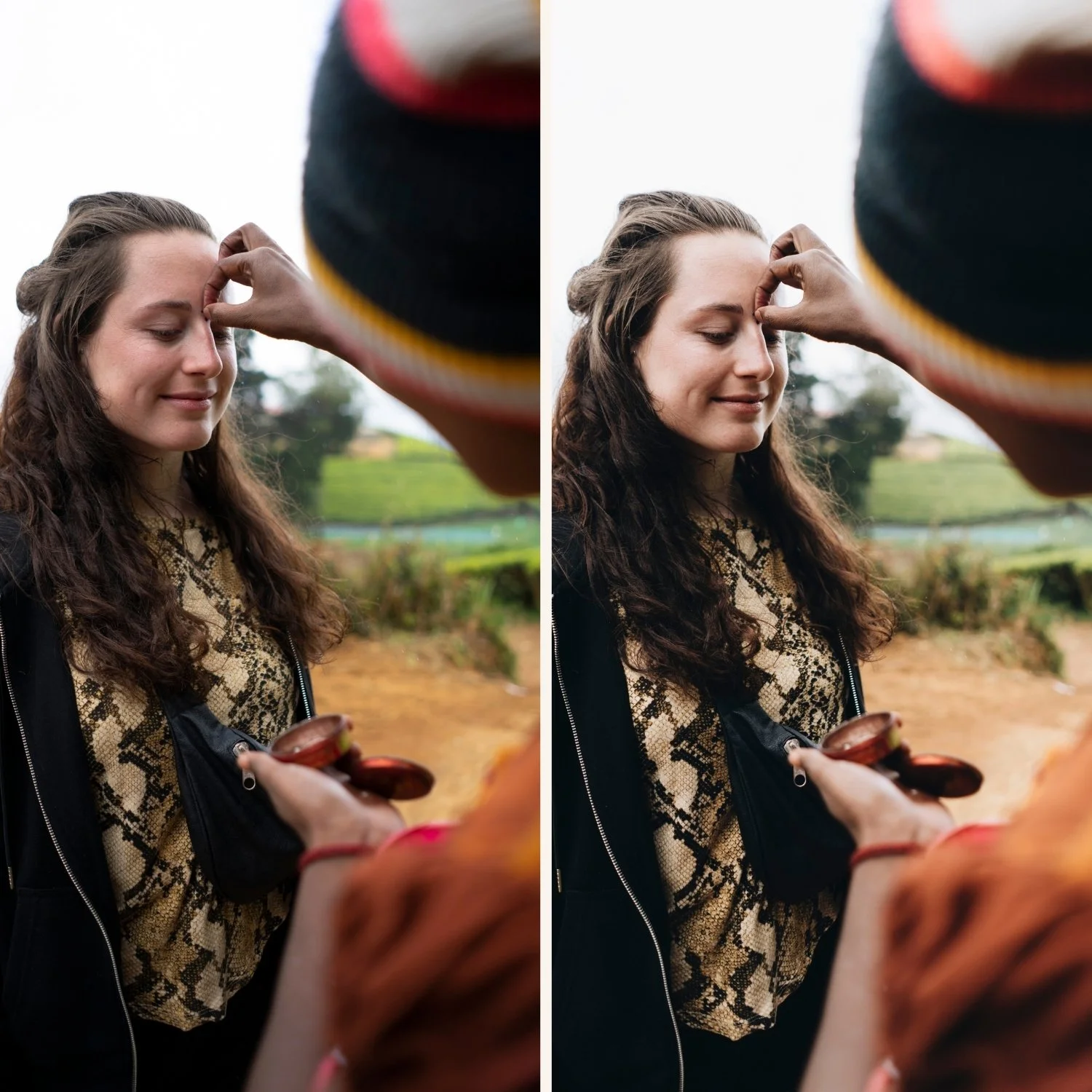
What makes a photo look like film?
Before touching any sliders, understand what film actually does differently from digital:
Lifted blacks — film never renders true black. Shadows lift to a dark grey rather than crushing to pure black, which gives images a soft, organic quality.
Gentle highlight roll-off — highlights on film fade gradually rather than blowing out suddenly. Bright areas retain detail and feel soft.
Reduced contrast — film has lower overall contrast than digital. The tonal range feels more compressed and natural.
Organic grain — film grain is random and textured. It adds character rather than noise.
Shifted color — film stocks have characteristic color biases. Most warm film stocks push oranges and yellows slightly, desaturate blues and greens, and render skin with a creamy warmth.
Reduced sharpness — film lenses and processing result in slightly softer images than modern digital sharpening produces.
Recreating the film look means dialing back the things digital does too aggressively — contrast, sharpness, saturation — and adding the things film does naturally — lifted blacks, grain, subtle color shifts.
How to shoot your iPhone photos for a better film result
The edit is easier when the photo is shot well. A few tips before you open Lightroom:
Expose slightly brighter than you think — film was typically shot slightly overexposed. A slightly bright iPhone photo will respond to film edits more naturally than a dark one.
Avoid heavy iPhone processing — go to Settings → Camera → Formats and set Photo Mode to "Most Compatible" (JPEG) rather than HEIF for better Lightroom compatibility. Turn off Smart HDR for a flatter base to work from.
Shoot in natural light when possible — harsh midday sun is the hardest to make look like film. Overcast, golden hour, and window light are much more forgiving.
Use Portrait Mode sparingly — Portrait Mode's artificial bokeh doesn't combine naturally with film grain. For a film aesthetic, flat-focus environmental shots often work better.
Step-by-step: the film look in Lightroom MobilE
Open your photo in Lightroom Mobile and work through these adjustments in order.
Step 1 — Set your exposure
Exposure: +0.3 to +0.5
Film tends to look slightly overexposed. A touch of extra brightness opens up the image and creates room for the shadow lift in the next step.
Step 2 — Reduce contrast
Contrast: -15 to -25
This is one of the most important adjustments. High contrast is the most "digital" look there is. Pulling contrast back immediately makes an image feel more analog.
Step 3 — Adjust highlights and shadows
Highlights: -20 to -35 (pull back for soft roll-off)
Shadows: +25 to +40 (lift shadows — this is what separates film from digital)
Whites: -15 to -25
Blacks: +20 to +30 (lifted blacks are the signature of film)
The shadows and blacks adjustment is critical. This is the "faded film" look — shadows that never quite go black.
Step 4 — Tone Curve
In Lightroom Mobile, tap Light → Tone Curve.
Create a gentle S-curve:
Lift the bottom-left anchor point upward slightly (lifts the shadows)
Pull the top-right anchor point down very slightly (softens highlights)
Add a slight bump in the midtones
This creates the characteristic film tonal range — soft at both ends, gentle in the middle.
Step 5 — Color adjustments
White Balance: Warm slightly — Temperature +100 to +300 depending on the scene. Film tends to run warm.
HSL — Hue:
Orange: shift toward yellow (+5 to +10) — warms skin tones
Yellow: shift toward green (+5) — gives that film color palette
Green: shift toward yellow (+10) — makes greens feel organic rather than vivid
Blue: shift toward cyan (+5 to +10) — film blues are cooler and slightly cyan
HSL — Saturation:
Red: 0 to -5
Orange: +5 (warms skin)
Yellow: -5 to -10
Green: -15 to -20 (desaturate greens — key to the film look)
Blue: -20 to -30 (muted blues are very characteristic of film)
Aqua: -10 to -15
HSL — Luminance:
Orange: +10 to +15 (brightens skin)
Green: -5
Blue: -10
Step 6 — Color Grading
Tap Color → Color Grading.
Shadows: add a slight warm tint (orange/amber) — move the hue dot toward orange, very subtle
Highlights: neutral to very slightly warm
Midtones: neutral
This adds the warm shadow quality that characterises most film stocks.
Step 7 — Reduce clarity and sharpness
Clarity: -5 to -15 (reduces the harsh digital micro-contrast)
Sharpness: reduce from default 40 to 20-25
Noise Reduction: 10-15 (smooths out the digital noise before adding film grain)
Step 8 — Add grain
Tap Effects → Grain.
Amount: 20-30
Size: 25-35
Roughness: 40-55
Start lower than you think you need. Film grain is subtle — it adds texture, not grit. If you can clearly see individual grain dots, it's too much.
Step 9 — Add a vignette (optional)
A subtle vignette draws the eye to the center and adds to the analog feel.
Tap Effects → Vignette.
Amount: -10 to -20
Feather: 70-80
Keep it subtle — it should be noticeable only at the edges
Save as a preset
Once you're happy with the result, save these settings as a preset so you can apply them to any photo with one tap.
Tap the three dots (⋮) in the top right → Create Preset → name it (e.g. "Film Look iPhone") → assign to a group → save.
Now this edit applies to any photo instantly. Adjust exposure and white balance after applying for each specific image.
The quickest method: use a preset
Building a film look from scratch takes time. A well-built preset applies all of the above in one click — then you adjust from there.
Our free Everyday Magic preset is built on this exact color science — lifted shadows, warm analog tones, subtle grain, reduced clarity. It's designed specifically to survive Instagram compression while maintaining the film aesthetic.
For the full preset collection covering warm film, moody, light & airy and more:
Adjusting the film look for different iPhone photos
Portrait photos — reduce clarity more (-15 to -20) for a softer skin quality. Push orange luminance up to +15-20 to brighten skin. Keep grain subtle.
Landscape photos — desaturate greens and blues more heavily. Add more grain (amount 30-35) for texture. A slightly cooler color grade works well for mountains and forests.
Street photography — higher contrast than usual for film (contrast -10 rather than -20). More grain (amount 30-40) for character. Consider going black and white — see our black and white editing guide.
Golden hour photos — the warm light already does most of the work. Reduce the temperature adjustment to avoid going too orange. Pull highlights back more (-40 to -50) to protect the warm glow.
Indoor / low light — iPhone photos in low light already have noise. Reduce grain amount to 10-15 since the natural noise adds texture. Increase noise reduction to 20-25 to tame the digital noise before the grain takes over.
FAQ
Does Lightroom Mobile cost money?
Lightroom Mobile is free to download and use. All the tools in this guide — including presets, curves, and grain — are available in the free version. No subscription required.
What's the best iPhone setting for a film look?
Shoot slightly bright, use natural light, and turn off Smart HDR in your camera settings for a flatter base image that responds better to film editing.
Can I use these settings on JPEG photos?
Yes. iPhone photos are typically JPEG and these settings work fine. RAW gives you more latitude, especially in shadows and highlights, but the film look works well on JPEG too.
Why does my film edit look different on Instagram?
Instagram compresses and sharpens every uploaded photo. Subtle film edits — grain, soft highlights — take the worst of this compression. Make sure you export at 1080px, sRGB, quality 80-85, sharpening off. See our Instagram export guide.
How do I get consistent results across a series of photos?
Save your settings as a preset (Step 9 above), then paste it to every photo in the series. Adjust white balance and exposure individually after applying — these vary per photo. Everything else stays consistent.