Instagram Filters vs Snapseed vs VSCO vs Lensa vs Tezza — Which Editing App Wins in 2026?
Instagram Filters vs Snapseed vs VSCO vs Lensa vs Tezza — Which Editing App Wins in 2026?
You have more photo editing apps than ever in 2026. Instagram has its built-in filters. Snapseed is free and surprisingly powerful. VSCO built its reputation on film-inspired aesthetics. Lensa and Tezza are newer apps with a strong social media following.
But which one actually gives you the best results?
This guide compares all five side by side — features, quality, limitations, and price — so you can make the right choice for your workflow.
Note: This is an independent comparison. None of the apps mentioned have sponsored or endorsed this guide.
| Snapseed | VSCO | Lensa AI | Tezza | ||
|---|---|---|---|---|---|
| Price | Free | Free | Free / $29.99/yr | Free / $29.99/yr | Free / $39.99/yr |
| Platform | iOS & Android | iOS & Android | iOS & Android | iOS & Android | iOS & Android |
| RAW support | ✗ | ✓ | Paid only | ✗ | ✗ |
| Preset system | Filters only | Limited | Strong | Limited | Strong |
| Manual control | Basic | Advanced | Advanced | Basic | Basic |
| Export quality | Compressed | Full res | Full res | Full res | Full res |
| Batch editing | ✗ | ✗ | ✗ | ✗ | ✓ |
| Best for | Quick sharing | Detailed edits | Film aesthetic | AI portraits | Instagram feed |
Instagram filters — built for speed, not quality
Instagram's built-in editing tools are the most convenient option by definition — you're already in the app. But convenience comes at a cost.
What works well
The basic adjustments — brightness, contrast, saturation, warmth — are fast and functional for quick edits before posting. The filter library covers the most common looks and requires zero learning curve.
The real problem
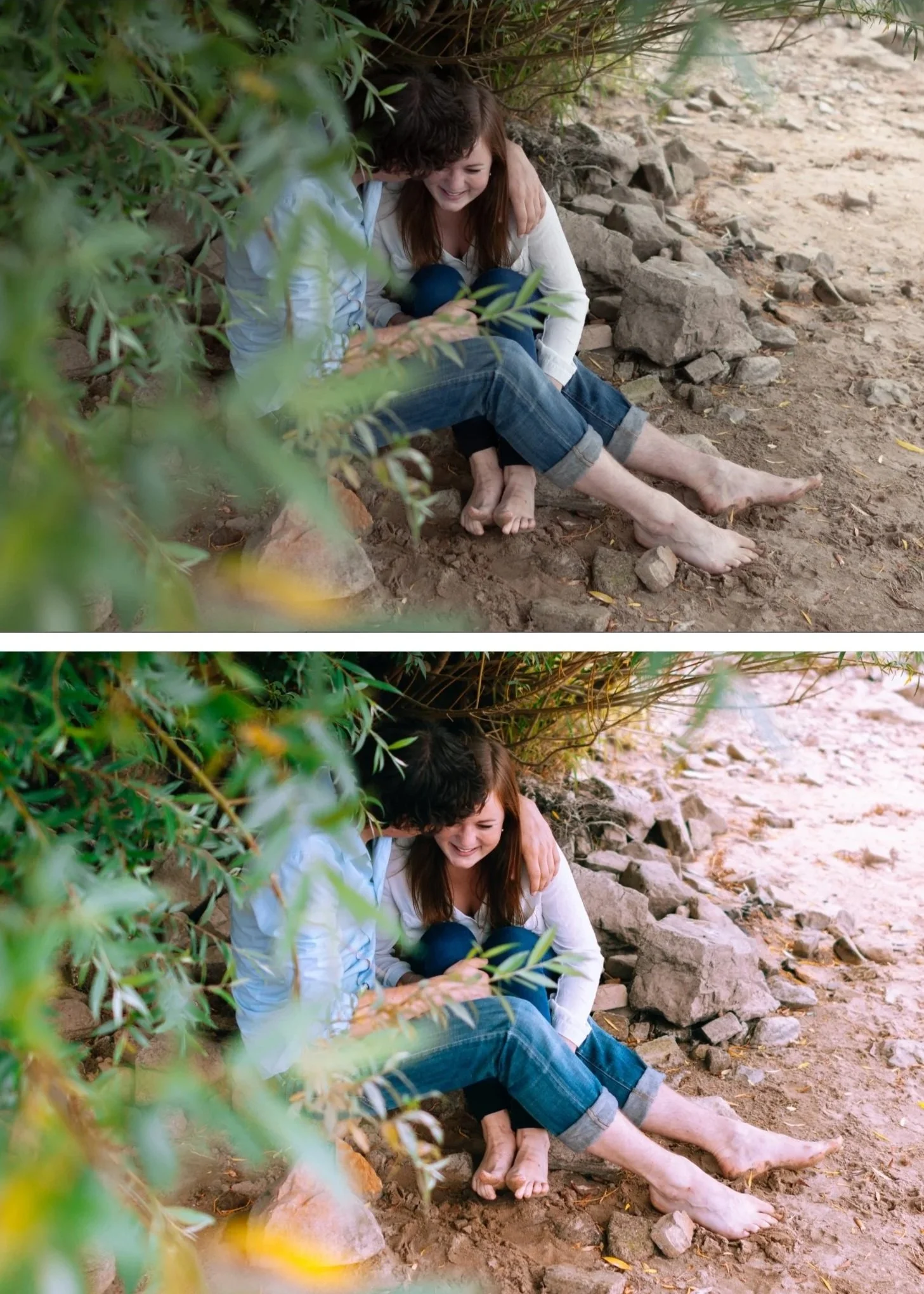
Instagram compresses every image the moment you upload, regardless of whether you edited it inside the app or imported from your camera roll. If you edit inside Instagram and then upload, your image goes through two rounds of compression. The result is softer, noisier images with less accurate color rendering than you started with.
Instagram's filters also apply a uniform look regardless of the lighting in your photo. A filter that works on a golden hour portrait will look wrong on an overcast street photo. There's no adaptive behavior.
The verdict
Instagram filters are fine for casual social media use where speed matters more than quality. For anyone who cares about consistent results, they're a dead end.
Price: Free
Snapseed — the best free editing app, full stop
Snapseed (developed by Google) is consistently underrated. It's free, has no subscription, supports RAW files, and offers a level of manual control that rivals paid apps.
What works well
The selective adjustment tool is genuinely impressive — you can apply adjustments to specific areas of a photo by tapping and dragging, without any masking or complex selection tools. The healing tool removes unwanted objects cleanly. The curves tool gives you full tonal control.
The "Looks" presets (Snapseed's filter system) are more subtle and adjustable than most competing apps. Every filter can be fine-tuned after applying, and you can adjust the overall strength.
The limitations
Snapseed's preset system isn't built around a cohesive aesthetic. The looks feel like isolated filters rather than a unified editing style, which makes it harder to build a consistent feed. The app is also better suited to editing individual photos than batch processing a full gallery.
The verdict
The best free option available. If you're editing on a budget and want real manual control, Snapseed beats everything else at its price point (free).
Price: Free

VSCO — the original film aesthetic app
VSCO built its reputation on film-inspired filters, and in many ways it still delivers on that promise. The A-series, C-series, and other film-inspired filter packs remain some of the most recognizable presets in photography.
What works well
VSCO's filter library is extensive and the film-inspired looks are genuinely well-crafted. The free tier includes a solid selection of filters and basic editing tools. The paid membership unlocks the full library and RAW editing support.
The editing interface is clean and the results tend to look more natural than competing apps. VSCO's film presets handle skin tones and highlight roll-off in a way that most filters don't.
The limitations
VSCO is a closed system. You can edit inside the app and share to VSCO's own social feed, but the export workflow to Instagram and other platforms is an extra step. The app has also shifted toward a social network model in recent years, which some photographers find distracting.
At $29.99 per year, the subscription cost adds up — and you don't own the presets you're paying for. If you cancel your subscription, you lose access to the filter library.
VSCO also doesn't offer the level of manual control that Snapseed or Lightroom provide. It's preset-first, which works well if you like the VSCO aesthetic but limits your flexibility.
The verdict
Strong film aesthetics and an easy interface make VSCO a good choice for photographers who want the film look without a steep learning curve. The subscription model is a drawback — you're renting access, not buying it.
Price: Free tier available / $29.99 per year for full access
Lensa AI — portrait enhancement powered by AI
Lensa AI is developed by Prisma Labs and is built around AI-driven photo enhancement rather than traditional filters or presets. It became widely known for its Magic Avatars feature — generating AI-illustrated portraits from selfies — but in 2026 it functions as a broader AI portrait editing tool.
What works well
Lensa's AI face retouching is genuinely impressive — it smooths skin, brightens eyes, and enhances facial detail more naturally than manual sliders in most apps. The AI background blur simulates depth-of-field effects for portraits shot on mobile. Sky replacement automatically detects and replaces overcast or blown-out skies. For portrait and selfie-focused creators, these tools deliver results that would take significant manual work in other apps.
The limitations
Lensa is a portrait tool first. It's not designed for building a cohesive editing aesthetic across a feed — there's no real preset system for color grading landscapes, travel photos, or lifestyle content consistently. No RAW support means you're always working with JPEGs. No batch editing means every photo is processed individually.
The AI enhancements can also be heavy-handed at full strength — skin retouching in particular can look over-processed if not dialed back.
The verdict
Best for creators who primarily shoot portraits and selfies and want AI-powered enhancement without manual editing knowledge. Less suited to photographers who want consistent color grading across varied content.
Price: Free tier available / $29.99 per year for full access

Tezza — built for Instagram aesthetics
Tezza was created by influencer and photographer Tezza Barton and has built a strong following among lifestyle photographers and Instagram creators. The app is specifically designed around aesthetics that perform well on Instagram.
What works well
Tezza's preset library is curated and consistent — the looks work well together and are clearly designed with Instagram feeds in mind. The app is straightforward to use and the results are visually cohesive.
The film-inspired presets are the strongest part of the app. If you want a clean, editorial-leaning feed aesthetic, Tezza delivers that reliably.
The limitations
Like Lensa, Tezza doesn't support RAW files. The manual controls are minimal. You're buying into a specific aesthetic system rather than a flexible editing tool.
The subscription model means you don't own the presets — cancelling means losing access. At $39.99 per year, you're paying annually for a preset library that you could replicate in Lightroom with a one-time purchase.
The verdict
Tezza is well-designed and delivers a consistent aesthetic for Instagram photographers. The lack of RAW support and limited manual control make it less useful outside of mobile-first workflows.
Price: Free tier available / $39.99 per year for full access

The alternative: Lightroom presets
All five apps above share one fundamental limitation — you're working within a closed system. You can only use the filters the app provides, you can't customize beyond what the interface allows, and with the subscription-based apps, you lose everything if you stop paying.
Lightroom presets solve all three problems.
Full ownership — a Lightroom preset is a file you own permanently. No subscription, no access loss, no ongoing cost.
Full control — Lightroom gives you complete manual control over every aspect of the edit after applying a preset. You're not locked into what the preset does — it's a starting point, not a ceiling.
RAW support — Lightroom works with RAW files from any camera, which means the preset is working with the full quality of your original image, not a compressed JPEG.
Consistent results across a full gallery — Lightroom presets apply the same color science across hundreds of images. Batch editing a wedding gallery or a travel shoot takes minutes rather than hours.
Works on desktop and mobile — Lightroom presets work in Lightroom Classic, Lightroom CC, and Lightroom Mobile. The same preset you use on your desktop applies identically on your phone.
The film-inspired looks that made VSCO popular — the A-series, the clean minimalist aesthetics, the warm analog tones — are all replicable in Lightroom with a preset. The difference is that you own the preset, you can adjust it, and it works on RAW files.
Try it for free
If you want to see how Lightroom presets compare to filter apps, download our free Everyday Magic preset. It's built on the same film-inspired color science as our paid collections and works in Lightroom Classic, CC, and Mobile.
It's completely free, see the quality difference for yourself.
Which app should you use?
You want the fastest possible workflow and you're only sharing to Instagram → Instagram's built-in tools are fine. Don't overthink it.
You want advanced control for free → Snapseed. Nothing comes close at the price point.
You want the film aesthetic on mobile without learning Lightroom → VSCO's free tier is a good starting point, though the subscription model is a long-term cost.
You shoot on mobile and want AI portrait enhancement → Lensa AI. You want a curated Instagram aesthetic → Tezza.
You shoot RAW, want full control, and want to own your editing tools → Lightroom presets. One-time cost, works on every platform, permanent ownership.
FAQ
Can I use VSCO filters in Lightroom?
Not directly — VSCO filters are proprietary to the VSCO app. However, many Lightroom preset packs are built to recreate the same film-inspired aesthetics. See our VSCO App Review 2026 for a direct comparison.
Is Snapseed better than VSCO?
For manual control and price (free vs subscription), Snapseed wins. For film-aesthetic presets with a cohesive library, VSCO has the edge. They serve different use cases.
Do any of these apps support RAW files?
Snapseed and VSCO (paid) support RAW. Instagram, Lensa AI, and Tezza do not.
Can I use Lightroom presets on my phone?
Yes — Lightroom Mobile supports the same presets as the desktop version. See our guides for installing presets on [iPhone](https://theeditingstudio.co/blog/how-to-install-lightroom-presets-iphone) and [Android](https://theeditingstudio.co/blog/how-to-install-lightroom-presets-android).
What's the best free photo editing app in 2026?
Snapseed is the best free editing app overall. For film-aesthetic presets specifically, VSCO's free tier is strong.
Is VSCO worth the subscription cost?
For mobile-only photographers who want a quick film look, yes. For photographers who shoot RAW or need batch editing, a one-time Lightroom preset purchase is better long-term value.
How do Lightroom presets compare to VSCO filters?
Lightroom presets apply the same type of color adjustments as VSCO filters, but with full manual control after applying, RAW file support, and permanent ownership. The film looks available in VSCO can be closely replicated in Lightroom.